
Organic Vegetables
Print/Download Page As PDF
Invest in Lesotho’s
Organic Vegetables Sector
A favorable climate, competitive operational costs, and privileged access to major global markets establish Lesotho as a premier destination for cultivating and processing high-value organic vegetables for export.
Introduction
The Kingdom of Lesotho offers a strategic, integrated investment in the organic vegetable value chain. This project establishes a scalable operation based on a nucleus estate and out-grower model, producing GLOBALG.A.P. and organic-certified vegetables for processing in modern HACCP/BRC-certified facilities.
This initiative establishes a scalable, certified operation to meet growing global demand for organic vegetables. The project is designed as a fully integrated, farm-to-export venture.
Operational Model:
The business is structured around nucleus commercial farms paired with a network of contracted out-growers. This ensures a consistent supply of GLOBALG.A.P. and organic-certified raw materials for a central HACCP/BRC-certified packhouse featuring IQF (Individual Quick Freezing) and canning lines, enabling export to the Southern African Customs Union (SACU) and global markets.
Go-to-Market Strategy:
Near-market:
Supply South African retailers, food-service operators, and processors seeking local, certified-organic supply.
Export:
Target EU, UK, and EFTA markets by leveraging duty-free, quota-free access for processed goods and certified fresh lines.
Target Export Products:
The venture will focus on producing high-value organic products for export, including fresh, canned, frozen, puréed, and souped vegetables.

The Project Location:
Strategic Site Locations:
Processing and packhouse facilities will be established in key industrial zones:
Belo, Tikoe, Maputsoe, Mafeteng, and Mohale’s Hoek. These sites offer existing shells/utilities and provide quick road access to South Africa’s economic hub of Gauteng and the critical port corridors of KwaZulu-Natal (Durban) and the Eastern Cape (Eastern Cape, Gqeberha). Botha Bothe, Leribe, Berea, Maseru, Mafeteng and Mohale’s Hoek provide land plains, soils and water suitable for primary production – also providing easy access to industrial parks.
Strengths &
Opportunities
The market opportunity for Lesotho is not just promising; it is quantifiably vast.
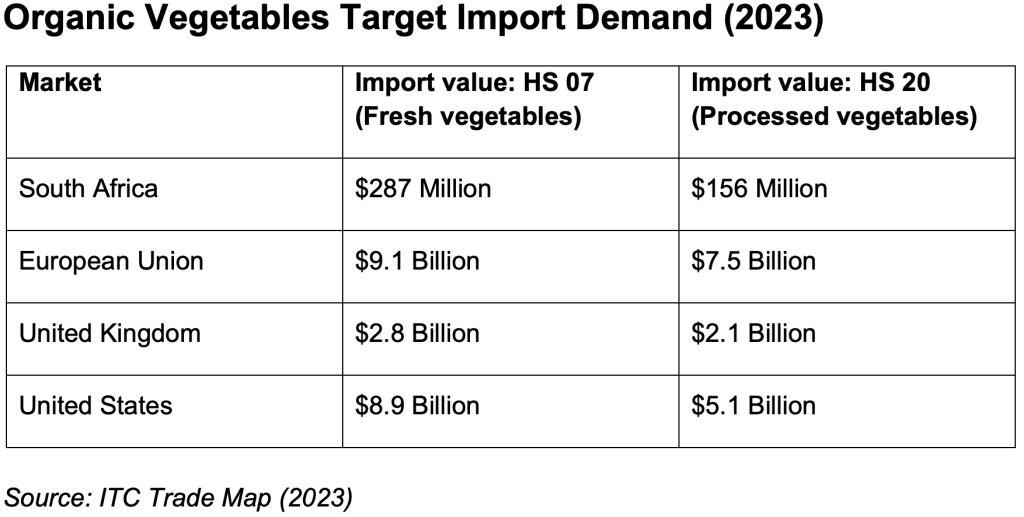
While Lesotho’s current exports of processed vegetables (HS 20) are minimal, the target markets present immense, ready demand. The immediate regional market, South Africa, imported USD 156m worth of processed vegetables in a single year. Beyond the region, the scale grows exponentially, with the European Union’s imports of the same products reaching a staggering USD 7.5bn. This immense gap between current exports and market demand clearly illustrates the significant, untapped potential for Lesotho to capture even a small fraction of this multi-billion dollar trade, further facilitated by preferential access agreements.
Strategic Advantages – The Lesotho Advantage:
Lesotho’s position is uniquely advantageous when analysed on axes of cost competitiveness and quality of market access. Many regional competitors face higher production costs with only moderate access to premium markets. Conversely, local producers within key export markets like the EU benefit from high market access but operate with very high cost structures. Lesotho occupies a strategically distinct and powerful quadrant: it combines low production costs, driven by favourable climate and competitive labour, with high-quality, duty-free market access to the EU and UK through preferential trade agreements. This rare combination creates a compelling and defensible competitive edge for investors.
Optimal Growing Conditions:
The mountainous terrain provides a temperate climate ideal for high-quality, nutrient-dense vegetables, forming a natural foundation for organic certification.
Favorable Investment Climate:
Features a 10% corporate tax for agro-processors, subsidized inputs, and a cost-competitive, trainable workforce.
Key Success Factors:
Workforce Development:
Specialized training programs in modern food processing and handling techniques
Technology Transfer: Public-private partnerships (PPPs) and JVs to introduce advanced agricultural technologies and cultivation methods
Regulatory Support:
A facilitative government policy framework specifically designed to support vegetable cultivation, processing and export operations
This integrated approach, combining targeted production with strategic partnerships and supportive policies, creates optimal conditions for investment success in Lesotho’s organic vegetable sector.
Incentives
10% corporate tax rate on agriculture and agro-processing.
Subsidies on agricultural input materials (e.g., seeds, fertilizers, fuel, etc).
• Agricultural goods produced in Lesotho
Training:
• Cost of Lesotho citizens allowable at 125% for tax purposes.
Withholding tax:
• 10% on service contracts with non-residents
• 25% on dividends distributed from income by resident companies to non-resident shareholders
• No withholding tax on dividends distributed to Lesotho residents
VAT:
• 15% on goods and services sold in Lesotho
• 0% on direct exports
Risk guarantees:
• Partial credit guarantee through the LNDC
• Tailor-made, agriculture-specific loan through the Lesotho Post Bank
Specific incentives for the horticulture sector:
Support from the LNDC includes:
• Serviced industrial and commercial sites at competitive rentals
• Provision of industrial and commercial buildings at competitive rentals
• Financial assistance on a selective basis
• Investment facilitation services
• Assistance with permits and licenses
• Assistance with company registration
• Assistance with industrial relations issues
• Appraisal of investment projects
• Assistance with preparation of project briefs for the Environment Impact Assessment (EIA) Certification
• Facilitating access to a Sesotho language technical training manual for local workers in on-farm and crop management
• Facilitating access to demonstration and
crop pilot plots
• Facilitation support to identify and mobilize village level farmer engagement
• Facilitating access to technical data on historical crop performance
Competitive advantages
• MOUNTAINOUS TERRAIN
• HIGH ALTITUDE
• ABUNDANT WATER
• COMPETITIVE & SKILLED LABOUR
List of investment opportunities
The project invites investment across a comprehensive value chain designed for market success:
Primary Production (Core Project)
Nucleus Farms, Out-grower Management & Processing Plant (IQF/Canning).
Post-Harvest Handling Infrastructure
Cold Chain Management (Storage, Refrigerated Transport, Freezing) & Packaging Facility.
Technology & Inputs
Irrigation Systems, R&D, Advisory, Organic Inputs Supply & Precision Agriculture.
SDGs alignment
This project would align with SDGs 1, 2, 8, 9, 10 and 15.
Lesotho has abundant fertile land, in mountainous surroundings, perfect for organic vegetable farming.
Financial Analysis
TOTAL INVESTMENT
A total investment of approximately:
USD 3.1m
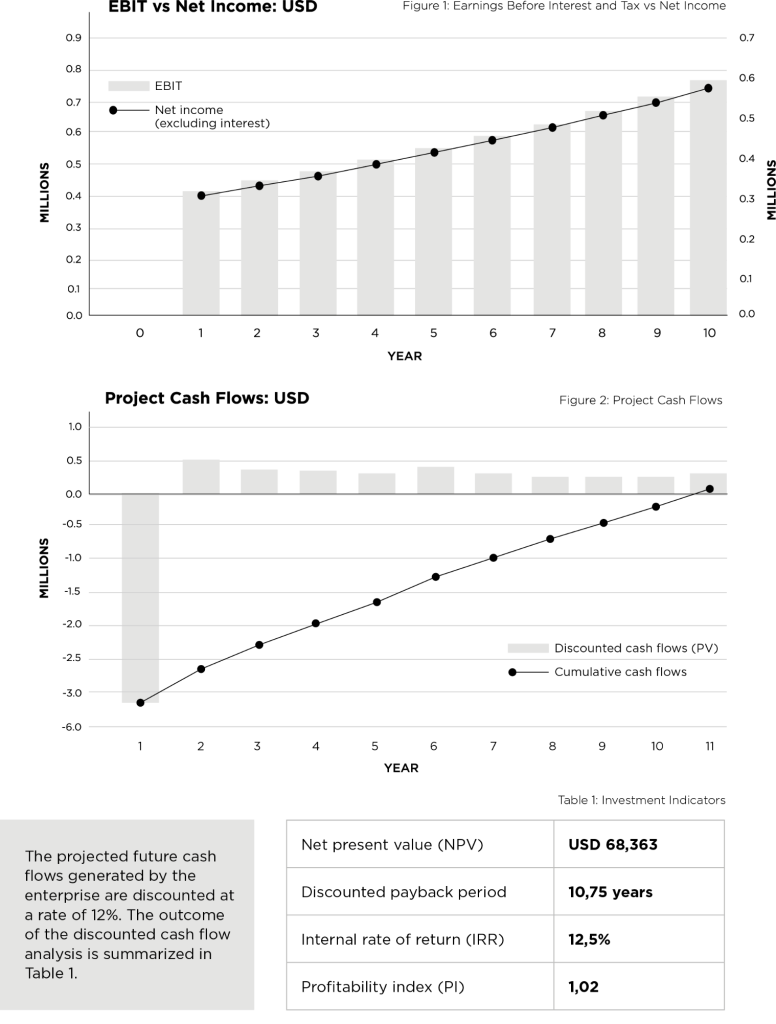
comprising fixed assets of USD 2.5m, pre-production expenditure of USD 255k and initial working capital of USD 289k will be required for the establishment of the Organic Vegetable enterprise. The graphs below illustrate a financially viable operation with the opportunity expected to generate a profit throughout its operational life.
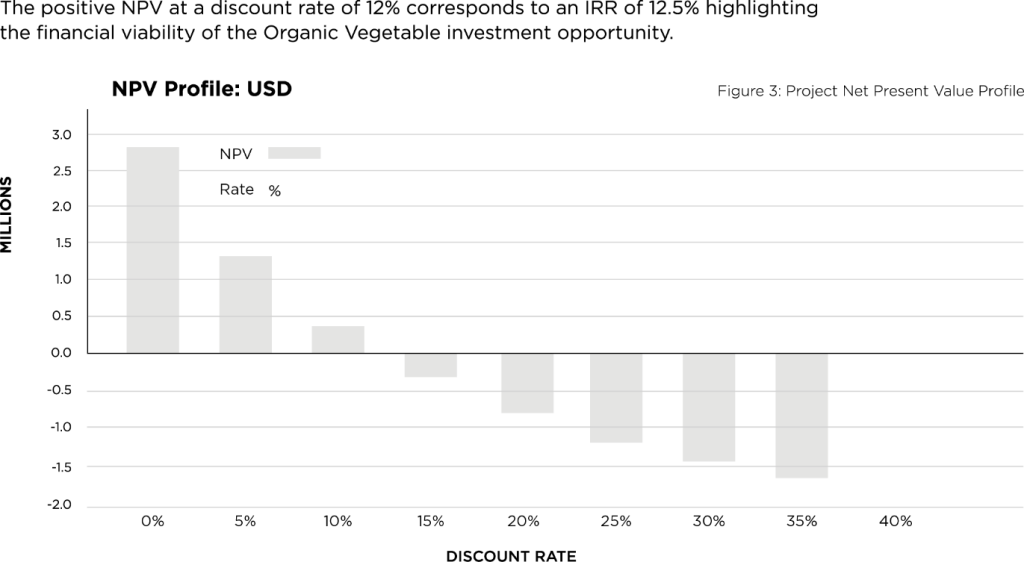
Whereas the opportunity generates a positive NPV and IRR, the initial investment cost of the project, although acceptable, is only expected to be fully recovered in Year 11. The investment opportunity nevertheless responds favourably to the Country`s developmental objectives through its positive socio-economic impact in terms of employment creation, economic agglomeration and potential forex earning opportunities.
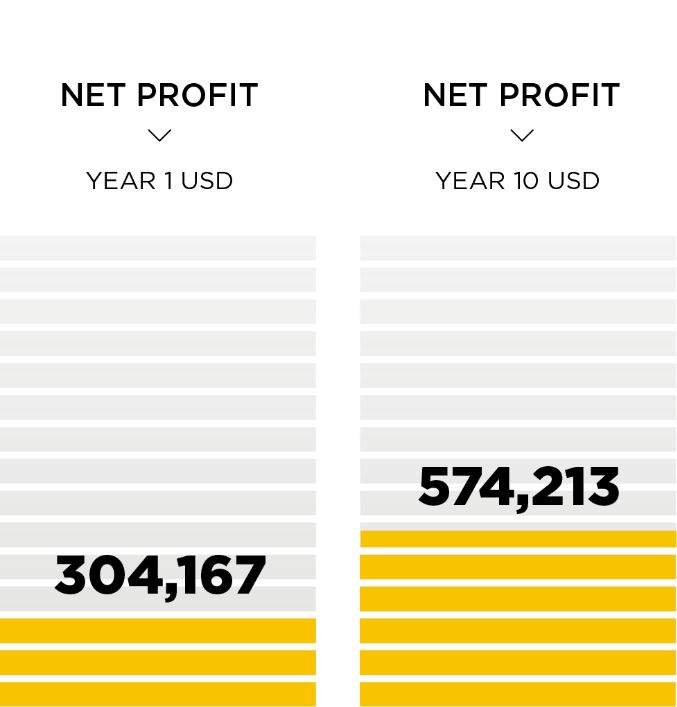
The enterprise’s annual net profit after tax increases from
USD 304k
in year 1 to approximately:
USD 574k
in year 10.
Similarly, the projected cash flows of the envisaged project indicate that it will generate positive net cash flows throughout the 10-year operational period.
Financial Analysis
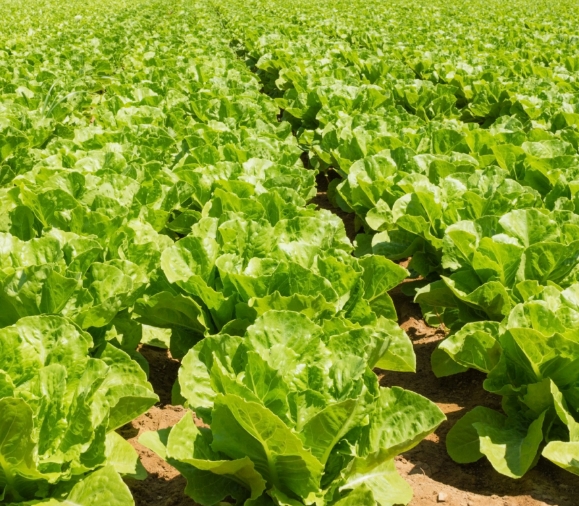
Possible site for organic vegetables.
Cucumber Crop
The financial analysis of the Organic Vegetable investment opportunity is computed over a ten year period. Revenue and expenditure projections are in line with industry growth prospects and market potential and have been informed by and benchmarked against industry standards and norms. In addition, assumptions relating to inflation; depreciation and salvage value; and company tax, have been worked out based on the existing laws and directives of the country. The figures above represent high level estimates as of October 2025 and are not derived from a full feasibility study. Investors are advised to conduct their own due diligence



DISCLAIMER
This web page provides a strategic overview. All financial figures are based on a high-level investment opportunity model and should be used as an indicator of potential only. Investors are strongly encouraged to conduct independent due diligence and a full feasibility study with the support of the LNDC to validate all assumptions under current market conditions.