LESOTHO Textiles and Garments – The Strategic Investment for Global Supply Chain Diversification. Capture the SACU/SADC/African, EU and Global Market Advantage: Invest in Lesotho’s Vertically Integrated, Cost-Competitive Apparel Platform for Post-AGOA Resilience.
Introduction
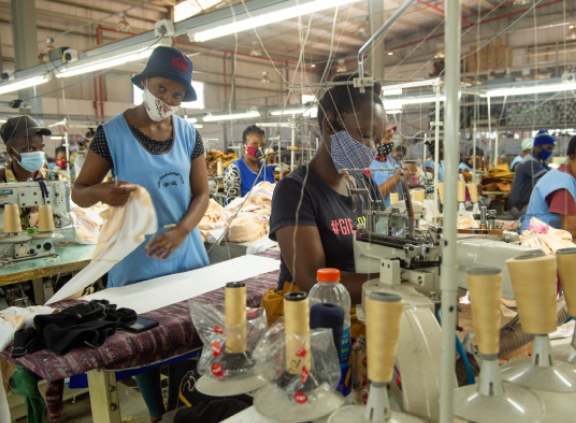
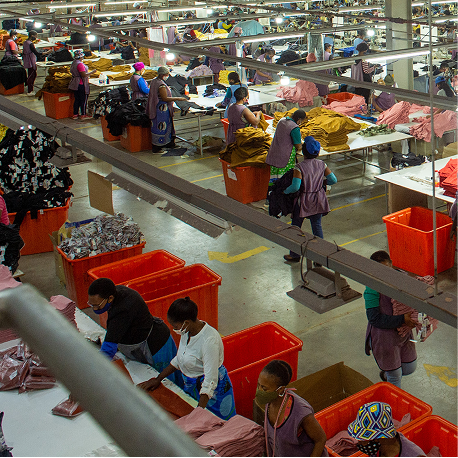
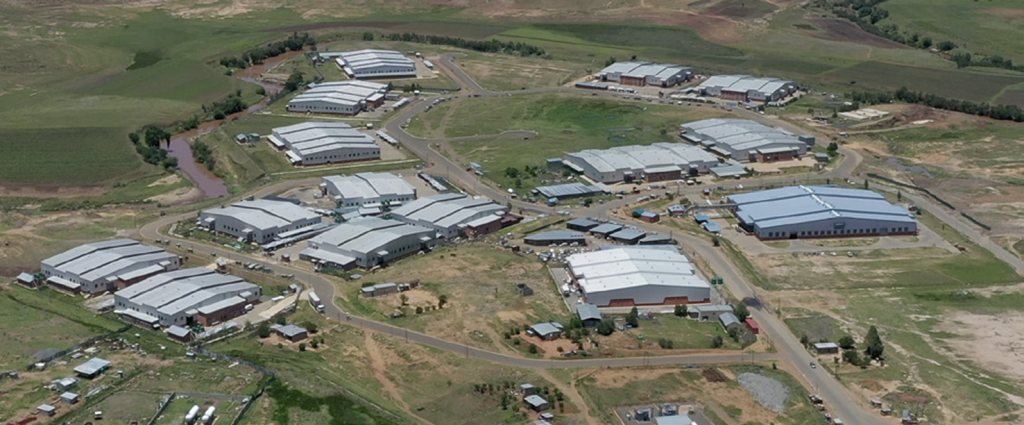
Lesotho is an established player in the global textiles and garments industry, with experienced labour, serviced industrial estates (Tikoe, Mohale’s Hoek, Maputsoe, Belo), and dependable cross-border logistics via South Africa.
The current focus is on moving up the value chain into higher-value, buyer-audited programs; tight lead-time replenishment for Southern Africa; and diversified preference markets (EU/UK/EFTA/MERCOSUR/North America).
The USA access is actively monitored and treated as a scenario due to the recent lapse of AGOA.
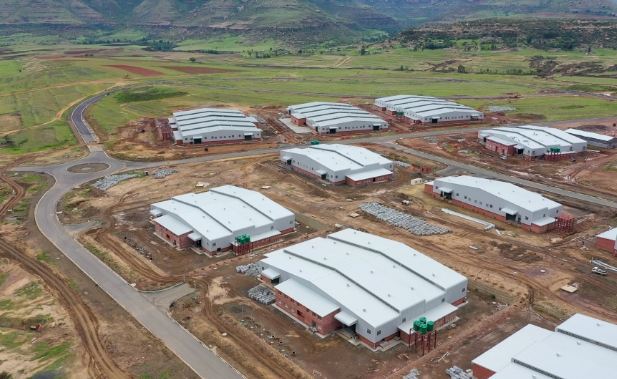
The proposed locations of the project are the established Ha Tikoe Estate in Maseru and Ha Belo Estate in Botha Bothe.
Sector Significance
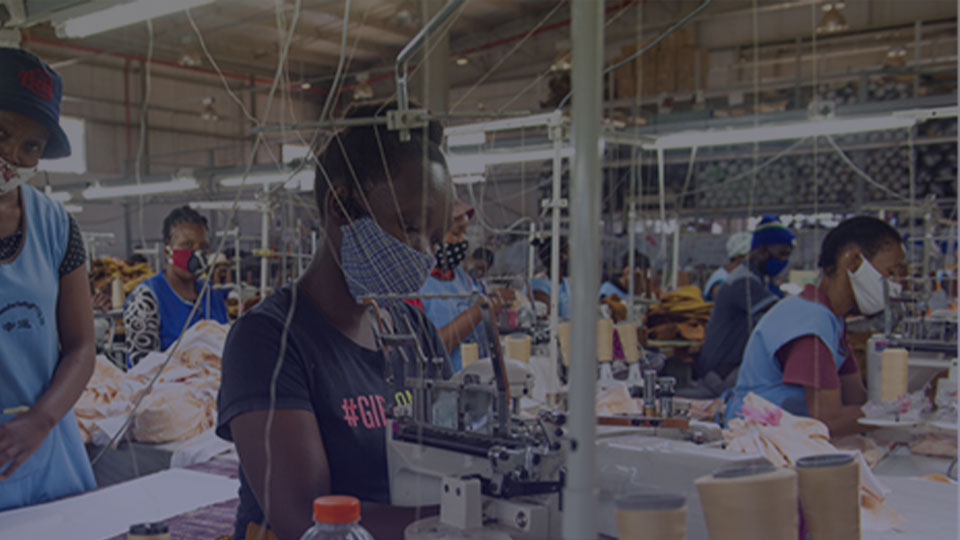
Employment: The textiles and apparel industry remains the country’s largest private-sector employer, supporting about 31,000–34,000 jobs in 2024 (predominantly women).
Foreign Exchange: Garment exports totaled roughly USD 300m in 2024 , and exports accounted for over 56.6% of manufactured goods exports in 2023.
Economic Impact: Historically, the sector accounted for 12–21% of GDP, underscoring its long-run centrality to household incomes and export earnings.
Strengths & Opportunities
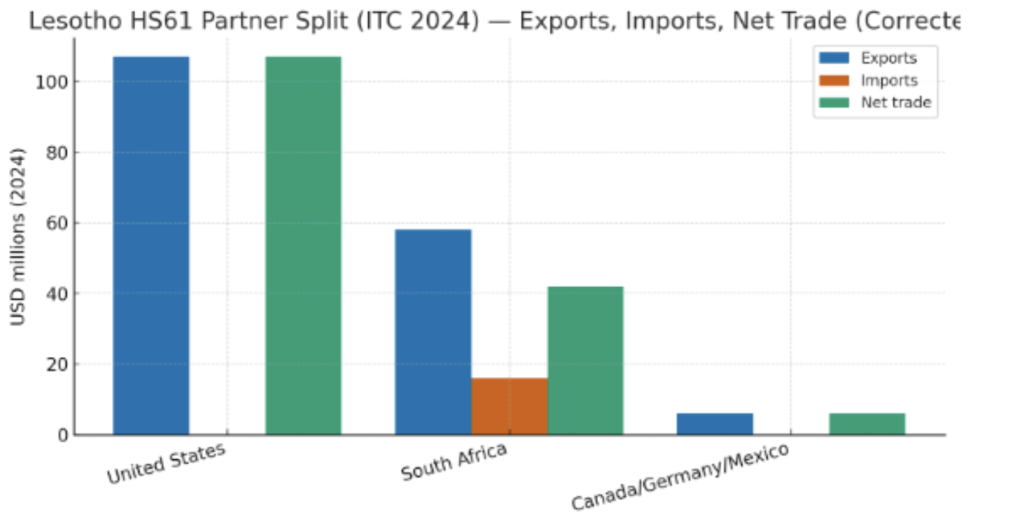
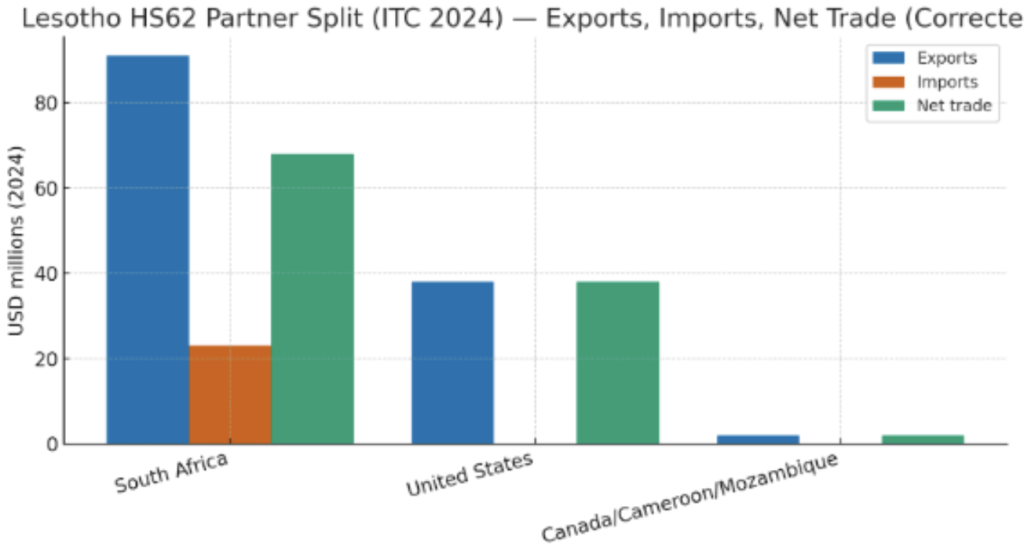
Lesotho’s cost-competitiveness Low wages and low utilities tariffs – rivals that of its African (Kenya, Mauritius, South Africa, Madagascar, Ethiopia, Eswatini) and Asian competitors (Bangladesh, Vietnam). Most of Lesotho’s textiles and garments are exported to the USA (USD 145m; 48.0% in 2024) and to South Africa (USD 149m; 49.3% in 2024).
Lesotho HS61 Trade Partners (ITC, 2024)
Lesotho HS62 Trade Partners (ITC, 2024)
Market Access and Trade Preferences
Regional Dominance (SACU/SADC): Lesotho enjoys tariff and quota-free access to the entire SACU, SADC and African (AfCFTA) markets. It is integrated into the Common Monetary Area (CMA), protecting intra-SACU sales from currency fluctuations.
EU/UK Focus: Duty-free/quota-free access is secured via the EU–SADC EPA and SACUM–UK agreements, positioning Lesotho strongly for diversification.
USA (AGOA) Status: The AGOA officially expired on September 30, 2025. While renewal is pending, investors should prioritize diversification to African, North American expansion (Canada, Mexico), EU, and other markets (EFTA, MERCOSUR) to mitigate policy risks.
Comparative Advantage and Trade Dynamics Cost Efficiency
Competitive wages, scalable skills, and serviced factory shells in estates like Tikoe, Maputsoe, and Belo reduce ramp-up time.
Regional Demand: South Africa is a top destination, underscoring the opportunity for near-market replenishment and regionalization of supply chains.
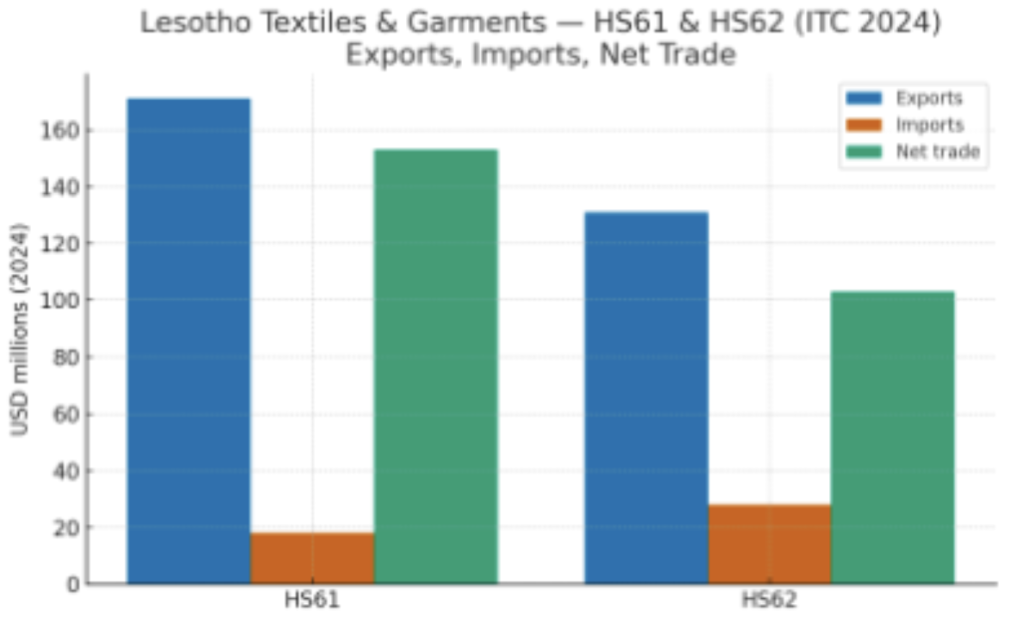
Strong Net Trade: Lesotho maintains a robust trade surplus in both garments product categories: HS61 (Knit Apparel): Net trade surplus of USD153m (Exports USD171m vs. Imports USD18m).
HS62 (Woven Apparel): Net trade surplus of USD103 million (Exports USD131Mm vs. Imports USD28m).
Logistics:
Access to the Port of Durban is straightforward. Shipments from Lesotho to the US ports compete favorably with those from Southeast Asia, typically taking 18 to 23 days.
Belo Industrial Park, Butha Buthe.
Lesotho Garments (HS61 & HS62) Trade (ITC, 2024)
Competitive advantages
Policy Priorities (LNDC Focus) Vertical Integration: Investment is directed at establishing closer fabrics/finishing capacity and increasing the local production of trims/components to deepen value addition and secure Rules of Origin (RoO).
Infrastructure: LNDC prioritizes upgrading utilities and wastewater capacity in priority estates to support dyeing/finishing operations.
Compliance: All production must align with buyer-audited QA, testing, and social/labour compliance standards.
Investment Incentives
Low corporate income tax: • 10% on profits from manufacturing
Training: • Cost of Lesotho citizens allowable at 125% for tax purposes
Withholding tax: • 10% on service contracts with non-residents • 25% on dividends distributed from income by resident companies to non-resident shareholders • No withholding tax on dividends distributed to Lesotho residents
VAT: • 15% on goods and services sold in Lesotho • 0% on direct exports Duty rebates and drawbacks under the SACU regime for specified materials/goods.
Risk guarantees: • Partial credit guarantee through the LNDC • Facilitation support to identify and mobilize labour and skills development partnerships
Support from the LNDC includes: • Serviced industrial and commercial sites at competitive rentals • Provision of industrial and commercial buildings at competitive rentals • Financial assistance on a selective basis • Investment facilitation services • Assistance with permits and licenses • Assistance with company registration • Assistance with industrial relations issues • Appraisal of investment projects • Assistance with preparation of project briefs for the Environment Impact Assessment (EIA) Certification
List of investment opportunities
Exported Apparel Products
Domestic Market Target Apparel Products
SDGs alignment
The project aligns with SDGs 1, 8, 9 and 10.
Financial Analysis
TOTAL INVESTMENT
A total investment of approximately:
USD 11.3m
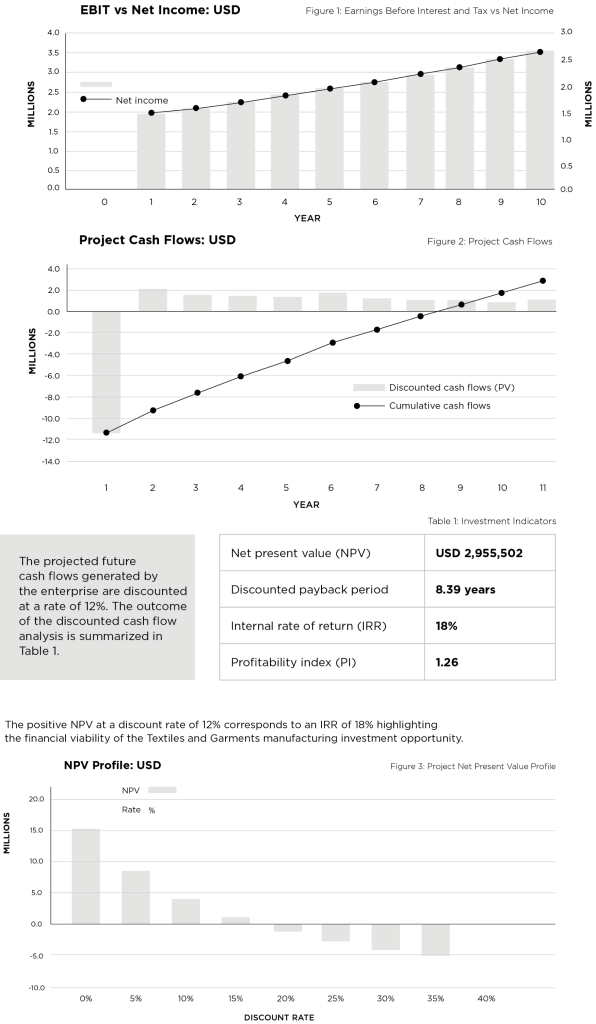
comprising fixed assets of approximately USD 9.2m, pre-production expenditure of USD 522k and initial working capital of USD 1.6m will be required for the establishment of the Textiles and Garments manufacturing enterprise. The graphs below illustrate a financially viable operation with the opportunity expected to generate a profit throughout its operational life.
In addition to the positive NPV and
IRR, the initial investment cost of the
project is expected to be fully recovered
in the beginning of the 9th year. The investment opportunity further responds
favourably to the Country`s developmental
objectives through its positive socio economic
impact in terms of employment
creation, economic agglomeration and
potential forex earning opportunities.
NET PROFIT
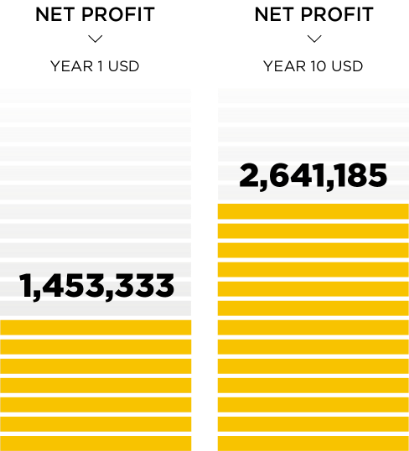
The enterprise’s annual net profit after tax increases from in Year 1
USD 1.4m
to approximately
USD 2.6m
in year 10.
Similarly, the projected cash flows of the envisaged project indicate that it will generate positive net cash flows throughout the 10-year operational period.
Financial Analysis
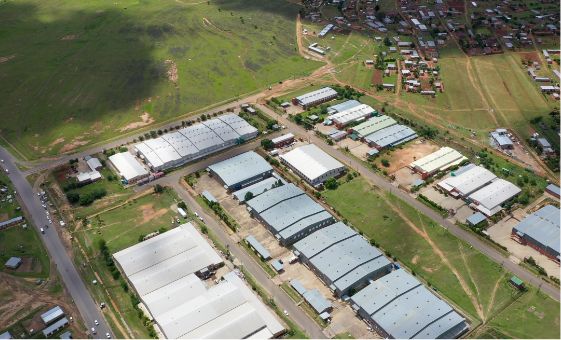
Nyenye Industrial Park, Maputsoe.
Belo Industrial Park, Butha Buthe.
NOTE
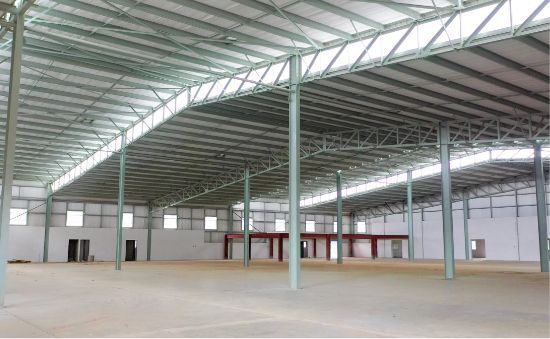
This is a mid-sized facility producing woven/knit fabrics. The factory has a production capacity of 1,500 tons of fabric annually. The financial analysis of the Textiles and Garments investment opportunity is
computed over a ten-year period. Revenue
and expenditure projections are in line with
industry growth prospects and market
potential and have been informed by and
benchmarked against industry standards
and norms. In addition, assumptions relating
to inflation: depreciation and salvage value:
and company tax have been worked out
based on the existing laws and directives
of the country. The figures above represent
high level estimates as of October 2025 and
are not derived from a full feasibility study.
Investors are advised to conduct their own
due diligence. The project assumes that the
investor will have a viable business case that is
driven by international client demand.
Disclaimer
This web page provides a strategic overview. All financial figures are based on a high-level investment opportunity model and should be used as an indicator of potential only. Investors are strongly encouraged to conduct independent due diligence and a full feasibility study with the support of the LNDC to validate all assumptions under current market conditions.