LESOTHO – SACU‑integrated, export‑ready, cost‑efficient assembly base for electrical appliances (HS85). Near‑market access to SADC; preference routes to rest of Africa, EU, UK, MERCOSUR and USA (modelled under AGOA).
Introduction
Lesotho is a practical greenfield base for establishing electrical‑appliance (HS85) assembly and sub‑assemblies, with SACU integration, near‑market proximity to South Africa’s distribution hubs, and facilitated set‑up via LNDC.
Policy priority: Government’s industrial policy prioritises re‑establishing an electrical‑appliances manufacturing base through CKD/SKD assembly and related sub‑assemblies. This project leverages Lesotho’s competitive labour costs, English-speaking, trainable workforce, proximity to South Africa, and preferential access to major global markets including the USA (GSP and AGOA), EU (EU-SADC EPA), SADC, and the rest of Africa through AfCFTA, as well as regional duty-free trade under SACU.
Electrical Appliances
Television Sets
Sound Recording
Sound Reproducers
Strengths & Opportunities
Lesotho has an abundant and stable labour force with a deserved reputation for manual dexterity. The Lesotho labour force is predominantly young. The literacy rate is 82% and 90% of the population speak English.
The majority of the population resides in the lowlands with direct access to the South African road network. Lesotho has relatively harmonious labour relations.
In the Lesotho manufacturing sector, wage rates are 20% of the those in the South African sector, making this a highly competitive location for South African OEMs looking to drive down production costs.
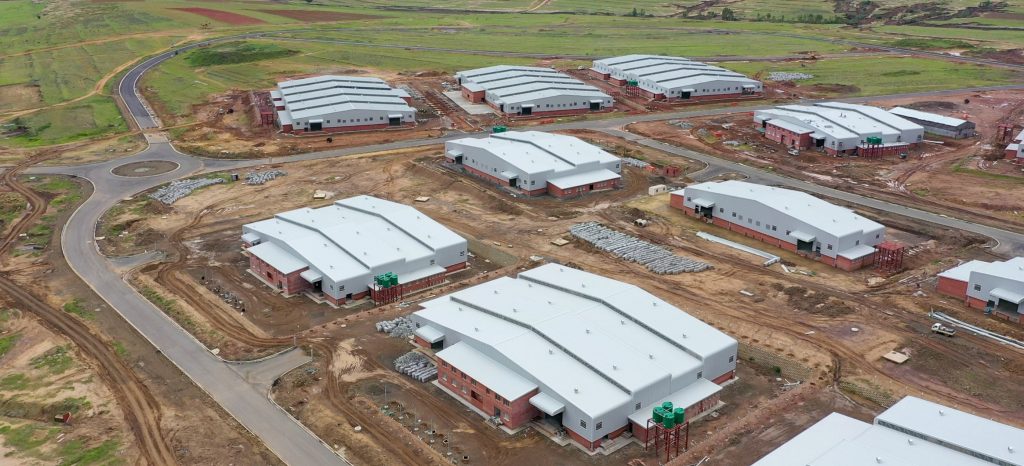
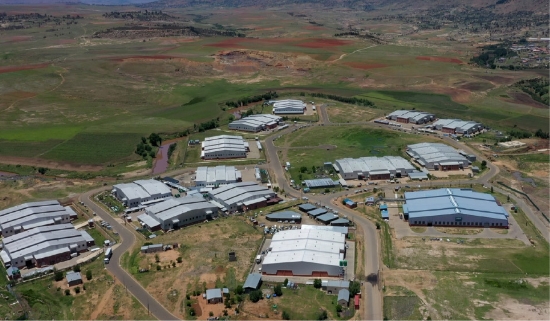
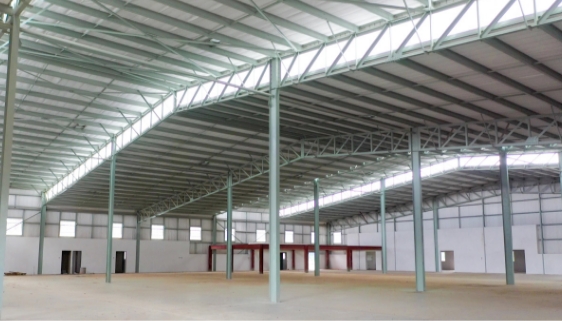
LNDC rents fully serviced factory shells in industrial estates located near population centres. This helps reduce set-up costs. The industrial estates at Belo near Butha-Buthe and Tikoe near Maseru are potential project locations.
Lesotho offers a wide range of attractive incentives to companies setting up manufacturing operations.
Belo Industrial Estate, Butha-Buthe
Incentives
Low corporate income tax: • 10% on profits from manufacturing
Training: • Cost of Lesotho citizens allowable at 125% for tax purposes
Withholding tax: • 10% on service contracts with non-residents • 25% on dividends distributed from income by resident companies to non-resident shareholders • No withholding tax on dividends distributed to Lesotho residents
VAT: • 15% on goods and services sold in Lesotho • 0% on direct exports • Duty rebates and drawbacks under the SACU regime for specified materials/goods.
Risk guarantees: • Partial credit guarantee through the LNDC • Facilitation support to identify and mobilize labour and skills development partnerships
Support from the LNDC includes: • Serviced industrial and commercial sites at competitive rentals • Provision of industrial and commercial buildings at competitive rentals • Financial assistance on a selective basis • Investment facilitation services • Assistance with permits and licenses • Assistance with company registration • Assistance with industrial relations issues • Appraisal of investment projects • Assistance with preparation of project briefs for the Environment Impact Assessment (EIA) Certification
Lesotho has an Unmatched Preferential Market Access.
Lesotho offers tariff-free access to SADC and SACU, as well as the broader African market through the AfCFTA. It also enjoys duty-free access to the U.S. under AGOA and EU (EU-SADC EPA)including electrical machinery, although only a fraction of this potential is currently utilized.
As a Least Developed Country, Lesotho benefits from preferential trade agreements with the , EFTA, MERCOSUR, China, and other nations under the Generalised System of Preferences (GSP), offering a clear competitive advantage over more developed exporters.
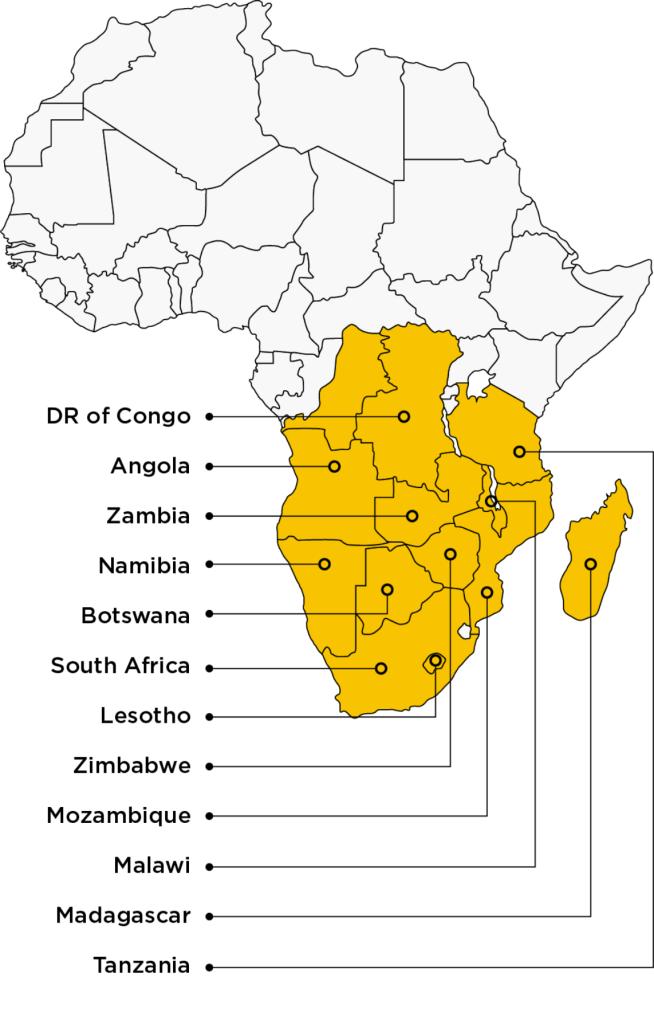
SADC COUNTRIES:
Market adjacency: Truck‑close to Gauteng, Kwazulu Natal and Eastern Cape distribution nodes; short lead‑time deliveries into South Africa, SADC and onward export via ports.
SACU integration: Duty‑free circulation within SACU simplifies movement of inputs and finished goods to South Africa.
Facilitated set‑up: LNDC estates (Tikoe, Belo) offer serviced shells, permits/utilities support and aftercare; appropriate for phased CKD/SKD lines and labour‑intensive sub‑assemblies (testing/QA, packaging, wire sets, plastics).
Scalable compliance: Early alignment of quality systems (buyer audits, RoO documentation) allows activation of preferences as volume stabilises.
SADC HS85 market snapshot:
SADC demand for electrical and electronic equipment (HS85) exceeded USD 16.54 billion in 2024, with South Africa the anchor market and robust demand across Mozambique, Tanzania, DRC and Zimbabwe. Figures below are sourced from the ITC Trade Competitiveness Map1.
List of investment opportunities
ELECTRICAL APPLIANCES
TELEVISION SETS
SOUND RECORDERS
SOUND PRODUCERS
Project Assumptions
Anchor demand in South Africa: Validate volumes with SA retailers/distributors or OEM/ODM channels; use near‑market replenishment to stabilise run‑rates. LNDC will allocate factory shells/plots (Tikoe, Belo, Maputsoe) with necessary wastewater capacity suitable for dyeing/finishing, and support EIA/permitting and utilities.
The project aligns with SDGs 1, 8, 9 and 10.
Belo Industrial Park, Butha-Buthe.
Tikoe Industrial Estate, Maseru.
Belo Industrial Park, Butha Buthe.
NOTE
The financial analysis of the Electrical Appliance investment opportunity is computed over a ten-year period. Revenue and expenditure projections are in line with industry growth prospects and market potential and have been informed by and benchmarked against industry standards and norms. In addition, assumptions relating to inflation; depreciation and salvage value; and company tax, have been worked out based on the existing laws and directives of the country. The figures above represent high level estimates as of January 2021 and are not derived from a full feasibility study. Investors are advised to conduct their own due diligence.
Disclaimer
This web page provides a strategic overview. All financial figures are based on a high-level investment opportunity model and should be used as an indicator of potential only. Investors are strongly encouraged to conduct independent due diligence and a full feasibility study with the support of the LNDC to validate all assumptions under current market conditions.