
Deciduous Fruits
Print/Download Page As PDF
Invest in Lesotho’s
Deciduous
Fruits Sector
LESOTHO Premium, Export-Oriented Fruit Production Heaven at the Heart of Southern Africa.
Introduction
Lesotho is your prime location for a high-value deciduous fruit enterprise. Capitalize on ideal growing conditions, pristine environments, and preferential access to lucrative markets to become a premium supplier.
This investment opportunity focuses on the commercial development of deciduous fruit -specifically apples, plums, apricots, and peaches – for local and export markets. The integrated project scope includes orchard establishment, state-of-the-art packhouses, and cold storage logistics. Lesotho’s high-altitude climate, pure water sources, and commitment to sustainable agriculture provide a foundation for producing fruit that meets the highest international quality and phytosanitary standards.

Strengths &
Opportunities
Lesotho’s pristine environment – with rich soils, pure water, and high air quality -creates ideal conditions for premium deciduous fruits, positioning it as a natural leader in the growing global market for organic produce.
Optimal Growing Conditions:
High-altitude terrain, rich organic soils, and significant diurnal temperature variation enhance fruit colour, sweetness, and shelf life.
“Purity” Brand Proposition:
Exceptionally high air and water quality create a powerful marketing story, with strong potential for organic certification to access premium markets.
Preferential Market Access:
Duty-free, quota-free access to the EU under the EU-SADC EPA and the UK under the SACUM-UK EPA³. The USA remains a key potential market.
Established Foundation:
5,500 hectares
OF IDENTIFIED SUITABLE LAND
Existing demonstration orchards and the Horticulture Training and Research Center at Mahobong provide technical support.
Government Incentives and Support:
• 10% corporate tax rate for agricultural production, VAT zero-rating on exports, and comprehensive support from the Lesotho National Development Corporation (LNDC).
Investment Incentives
Corporate tax:
• 10% on profits from commercial agriculture and agro-processing
Training:
• Cost of Lesotho citizens allowable at 125% for tax purposes
Withholding tax:
• 10% on service contracts with non-residents
• 25% on dividends distributed from income by resident companies to non-resident shareholders
• No withholding tax on dividends distributed to Lesotho residents
VAT:
• 15% on goods and services sold in Lesotho
• 0% on direct exports
Risk guarantees:
• Partial credit guarantee through the LNDC
• Tailor-made, agriculture-specific loan through the Lesotho Post Bank
Specific incentives for the horticulture sector:
Support from the LNDC includes:
• Serviced industrial and commercial sites at competitive rentals
• Provision of industrial and commercial buildings at competitive rentals
• Financial assistance on a selective basis
• Investment facilitation services
• Assistance with permits and licenses
• Assistance with company registration
• Assistance with industrial relations issues
• Appraisal of investment projects
• Assistance with preparation of project briefs for the Environment Impact Assessment (EIA) Certification
• Facilitating access to a Sesotho language technical training manual for local workers in on-farm and crop management
• Facilitating access to demonstration and crop pilot plots
• Facilitation support to identify and mobilize village level farmer engagement
• Facilitating access to technical data on historical crop performance
Markets
Lesotho-grown fruit can be exported duty-free to African markets under SACU, SADC and AfCFTA, and to the EU, UK, EFTA, Asia and the Americas under preferential trade agreements – reaching over 1 billion consumers globally.
As a SADC and SACU member, Lesotho enjoys quota- and tariff-free access to a 300 million-strong regional market. Its strategic location and road connectivity enable fast, low-cost delivery to key export hubs and ports (4 – 8 hours truck drive) – Johannesburg, East London, Gqeberha, Cape Town, and Durban – and SADC roads network.
Successful trials supplying South African supermarkets with apples, plums, and peaches confirm the commercial viability.
Market Evidence
Strong and growing regional demand, coupled with Lesotho’s minimal current exports, reveals a significant market opportunity.
Export Opportunity: The SADC region import bill of over USD 1.4 billion for these fruit categories presents a vast, addressable market.
Import Substitution: Lesotho’s own fresh fruit imports of over USD 15.6 million demonstrate a ready domestic market for locally produced, high-quality fruit.
Market Gap: Lesotho’s current export volume is negligible, indicating a clear opportunity to capture market share with a professional, commercial-scale operation. The inclusion of HS 0810 (Other Fresh Fruits) highlights additional opportunities in berries and other high-value produce.
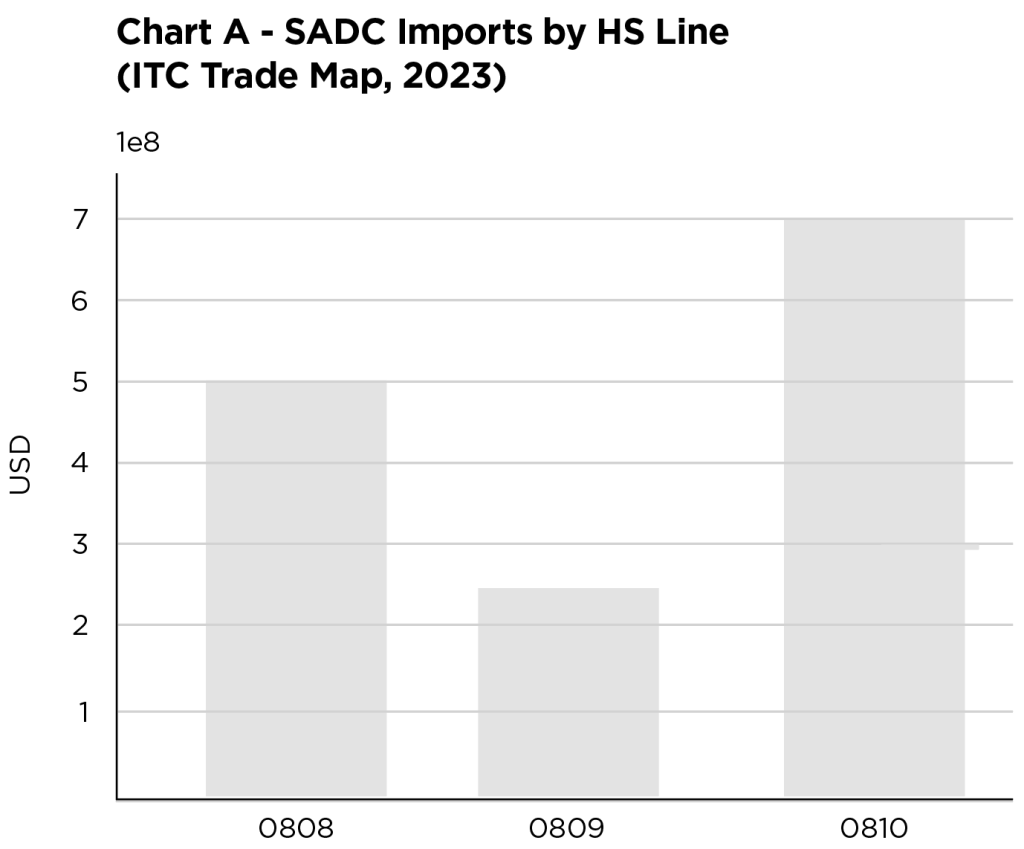
SADC Deciduous Fruits Imports (ITC Trade Map, 2023)
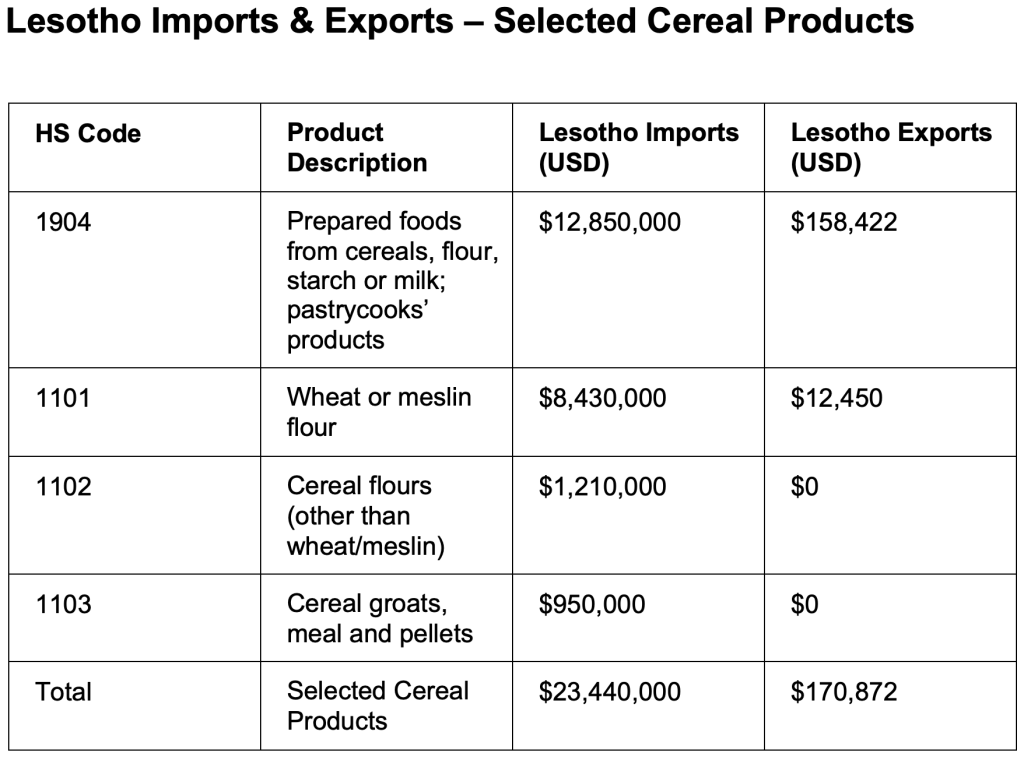
Lesotho Deciduous Fruits Trade (ITC Trade Map, 2023)
Competitive advantages
- EXPORT MARKETS OPPORTUNITIES IN SADC, REST OF AFRICA, EU & UK
- FAVOURABLE CLIMATE AT & TOPOGRAPHY
- AVAILABLE WATER FOR IRRIGATION
List of investment opportunities
Illustrative Investment Scope:
Investors can engage in a range of high-value activities across the deciduous fruit value chain:
Integrated Orchard and Packhouse:
Develop greenfield orchards (apples, pears, stone fruit) with integrated on-farm pre-cooling and packhouse facilities for full quality control.
Centralized Packing and Cold Chains:
Establish a centralized, state-of-the-art packhouse and cold chain facility operating on a fee-for-service model for multiple growers in Lesotho and cross-border regions.
Value-Added Processing:
Capture additional value by processing Grade B/C fruit into consumer goods such as dried fruit, purées, juices, and private-label retail products for the SACU market.

SDGs alignment
The project aligns with SDGs 1, 2, 8, 9, 10 and 15.
Financial Analysis
For the establishment of a 100-hectare deciduous fruit farming enterprise, a total investment of approximately:
USD 2.3m
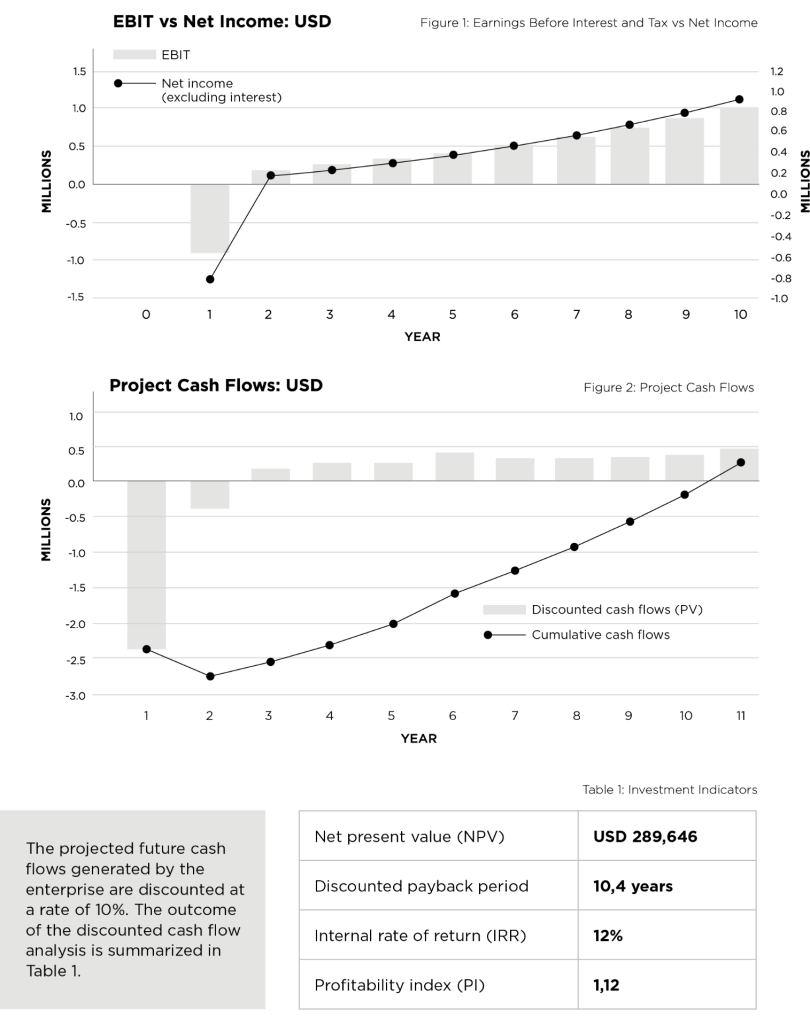
comprising fixed assets of USD 1.9m, pre-production expenditure of USD 170k and initial working capital of USD 272k will be required. The graphs below illustrate a financially viable operation with the opportunity expected to generate a profit throughout its operational life.
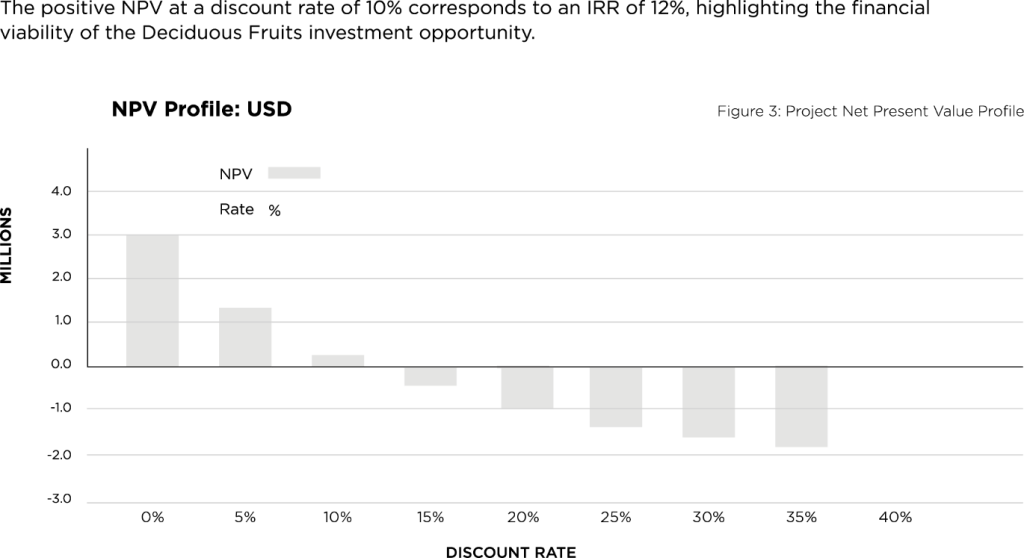
While the project has a positive NPV and IRR, the initial investment cost of the project is only expected to be fully recovered in just over 10 years. The investment opportunity supports the country`s developmental objectives through its positive socio economic impact in terms of job creation, economic agglomeration and potential forex earning opportunities.
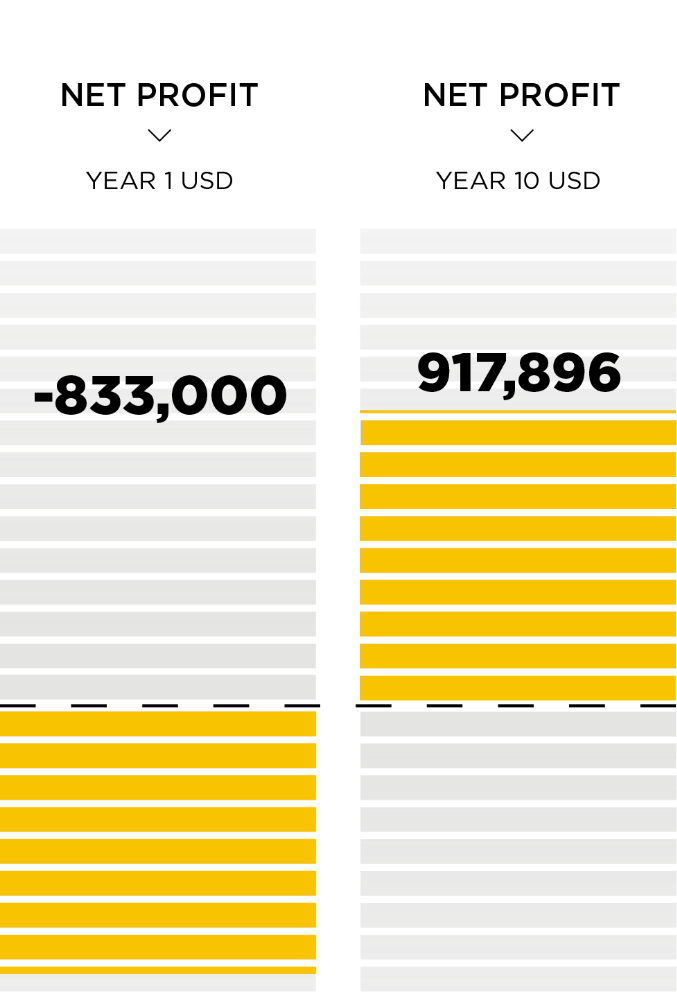
The enterprise’s annual net profit after tax increases from a loss of
in Year 1 to approximately:
in Year 10. Similarly, the projected cash flows of the envisaged project indicate that the project will generate positive net cash flows from Year 2 to Year 10.
Financial Analysis
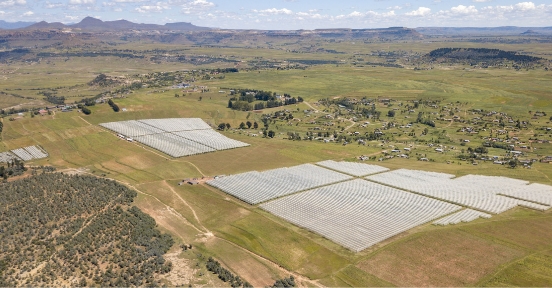
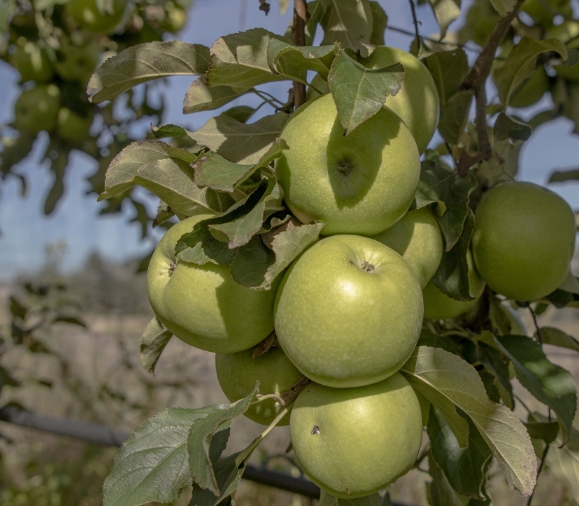
Operational fruit farm in Mahobong, Lesotho.
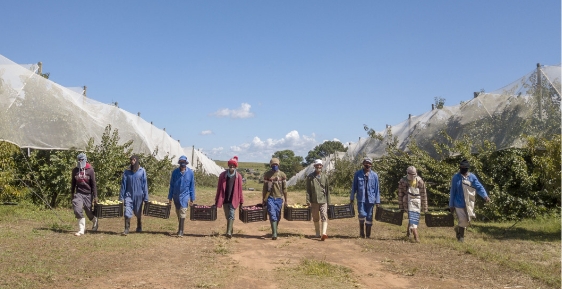
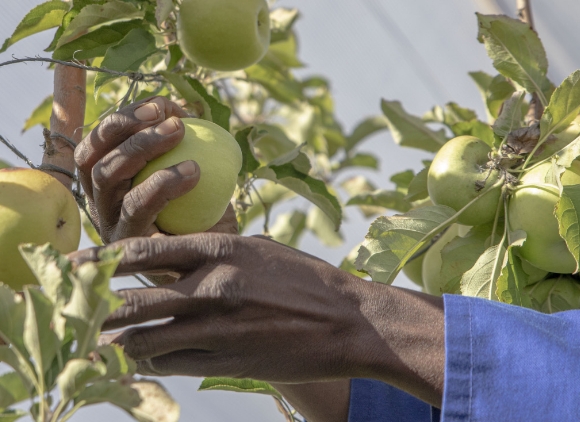
Bringing in the harvest!
NOTE



Disclaimer
This web page provides a strategic overview. All financial figures are based on a high-level investment opportunity model and should be used as an indicator of potential only. Investors are strongly encouraged to conduct independent due diligence and a full feasibility study with the support of the LNDC to validate all assumptions under current market conditions.