
Footwear
Print/Download Page As PDF
Invest in Lesotho’s
Footwear Sector
Introduction
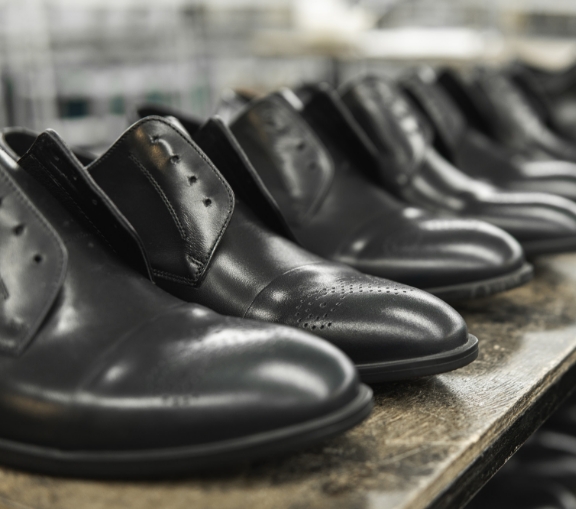
Positive conditions exist to re-establish and expand the footwear industry in Lesotho, exporting high-value products. This opportunity leverages Lesotho’s established skills base, preferential trade access, and commitment to sustainable manufacturing.
The investment aims at re-establishing a modern, export-focused Footwear Manufacturing enterprise. This strategy shifts the historical focus from basic CMT (Cut, Make, Trim) to producing finished footwear products.
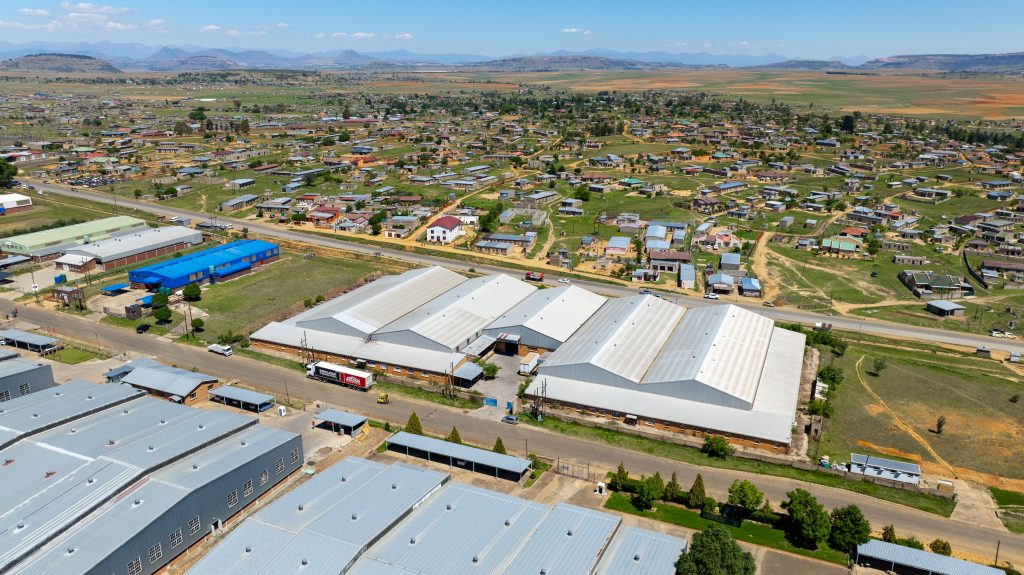
The investment is strategically integrated with SACU and SADC market integration, serviceable industrial estates, and reliable labour. The primary target is export, leveraging preferential access to African and international markets (EU under the EU/SACU EPA, North America). The main industrial estates ready for this investment are Belo in Butha Buthe, Maputsoe (historically home to most footwear manufacturers), and Tikoe in Maseru.
The Project Location:
The main industrial estates are
Belo in Butha Buthe district, Maputsoe
– home of most footwear
manufacturers in Lesotho
and the capital Maseru.
Strengths &
Opportunities
Lesotho offers a unique opportunity for sustainable footwear and textile manufacturing.
With clean water from the Lesotho Highlands Water Project, growing renewable energy, and reliable utilities at competitive rates, it supports low-impact production. The country is ideal for circular economy models that recycle textile and leather offcuts from across the region. A young, skilled, and English-speaking workforce,
LITERACY RATE OF OVER
76%
combined with stable labour relations and duty-free access to the USA, EU, and Africa, makes Lesotho a compelling destination for responsible, export-focused brands.
Competitiveness factors
In the Lesotho manufacturing sector, wage rates are 20% of those in the South African sector, making this a highly competitive location for South African OEMs looking to drive down production costs. The LNDC rents fully serviced factory shells in industrial estates located near population centres including Maseru.
Incentives
Low corporate income tax:
• 10% on profits from manufacturing
Training:
• Cost of Lesotho citizens allowable at 125% for tax purposes
Withholding tax:
• 10% on service contracts with non-residents
• 25% on dividends distributed from income by resident companies to non-resident shareholders
• No withholding tax on dividends distributed to Lesotho residents
VAT:
• 15% on goods and services sold in Lesotho
• 0% on direct exports
• Duty rebates and drawbacks under the SACU regime for specified materials/goods.
Risk guarantees:
• Partial credit guarantee through the LNDC
• Facilitation support to identify and mobilize labour and skills development partnerships
Support from the LNDC includes:
• Serviced industrial and commercial sites at competitive rentals
• Provision of industrial and commercial buildings at competitive rentals
• Financial assistance on a selective basis
• Investment facilitation services
• Assistance with permits and licenses
• Assistance with company registration
• Assistance with industrial relations issues
• Appraisal of investment projects
• Assistance with preparation of project briefs for the Environment Impact Assessment (EIA) Certification
Strengths &
Opportunities
Lesotho manufactures around 7.2 million pairs of shoes per year. The factories are owned by South African companies and South Africa is the biggest market for Basotho footwear.
Market Access and Trade Dynamics
Lesotho offers unmatched preferential market access, providing a significant comparative advantage. The investment is anchored by two sales channels:
Regional Dominance (SACU/SADC):
Tariff-free access to the large South African retail network (over 1,500 independent retailers). Sales within the SACU Common Monetary Area (CMA) are protected from currency fluctuations.
Global Preferences (EU/USA):
Access is secured through the EU–SADC EPA, SACUM–UK EPA, and SACU–EFTA. Footwear is AGOA eligible for the USA market, offering a pathway for tariff-free export once any renewal is confirmed.
Market Deficit:
The local opportunity is massive: Lesotho’s imports of Footwear (HS 64) totaled USD 18.922 million in 2024, versus exports of USD 8.164 million, creating a clear USD 10.7 million trade deficit for local production to capture.
LESOTHO BENEFITS
Comparative Advantage and Future-Proofing Labour and Skills:
Lesotho has an abundant, stable, and cost-competitive labour force with a tradition of manual dexterity. The literacy rate is over 82% (2022).
Sustainability Focus:
Global demand for sustainable footwear is a major driver. Lesotho offers stable water/hydropower and the opportunity to develop sustainable, high-end leather footwear. This strategy aligns with the goal of locally sourcing Basotho leather and setting up regional recycling of textile and leather offcuts.
Value Chain:
The immediate start can focus on labour-intensive sub-assemblies (uppers stitching, cutting) before expanding into integrated components (insoles, soles) to maximize Rules of Origin (RoO) compliance for export.
List of investment opportunities
• Footwear for Export
• CMT Operations
Project Assumptions
LNDC will allocate factory shells/plots (Tikoe, Belo, Maputsoe) with necessary wastewater capacity suitable for dyeing/finishing, and support EIA/permitting and utilities.
SDGs alignment
The project aligns with SDGs 1, 8, 9 and 10.
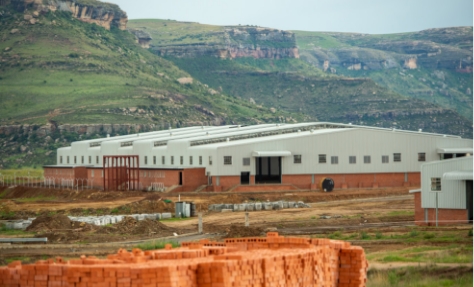
Belo Industrial Estate, Butha Buthe District.
Financial Analysis
A total investment of approximately:
USD 55.6m
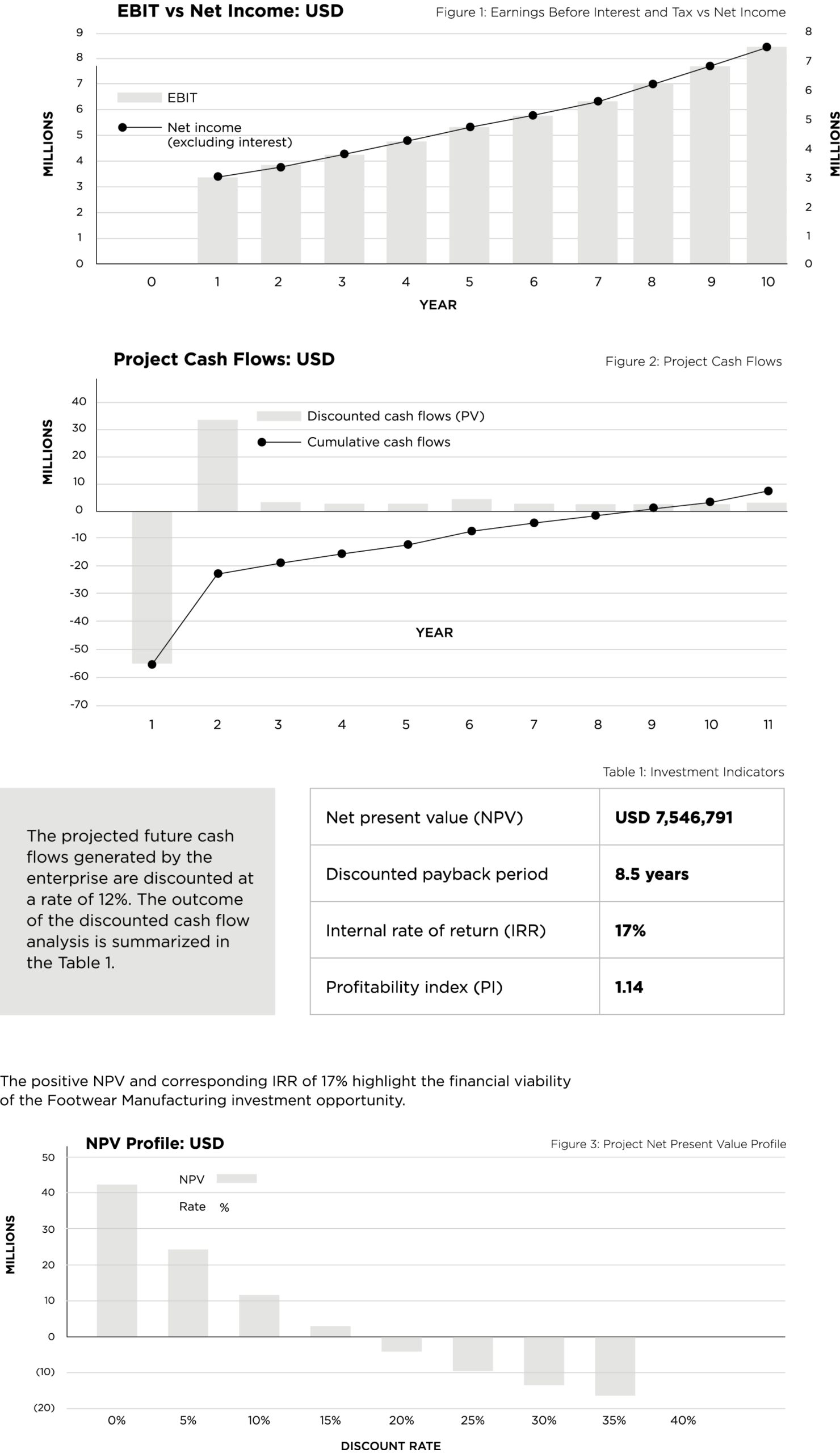
comprising fixed assets of USD 15.5m, pre-production expenditure of USD 100k and initial working capital of USD 40m will be required for the establishment of the Footwear Manufacturing enterprise. The graphs below illustrate a financially viable operation with the opportunity expected to generate a profit from Year 1 onwards.
The NPV and IRR of the project are positive and the initial investment cost of the project is expected to be fully recovered in year 9. The investment opportunity responds favourably to the Country’s developmental objectives through its positive socio-economic impact in terms of employment creation, economic agglomeration and potential forex earning opportunities.
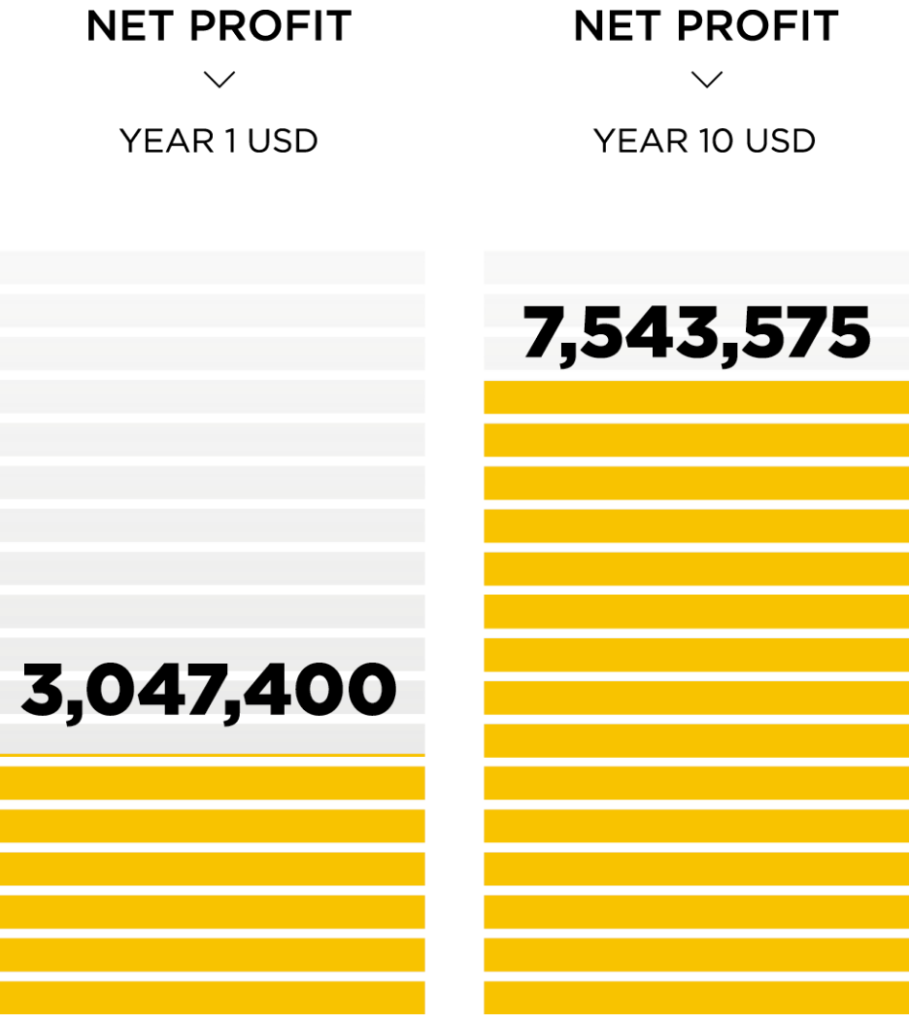
The enterprise’s annual net profit after tax increases from
USD 3m
in Year 1 to approximately:
USD 7.5m
in Year 10.
Similarly, the projected cash flows of the envisaged project are positive from Year 1 through to Year 10.
Financial Analysis
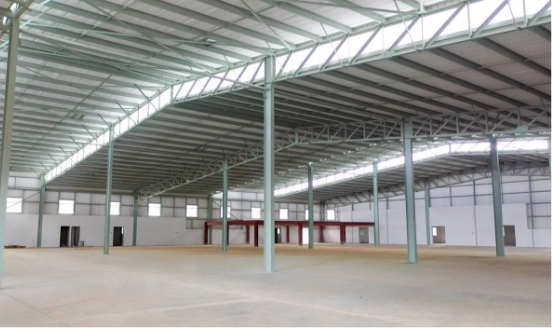
Belo Industrial Park, Butha Buthe.
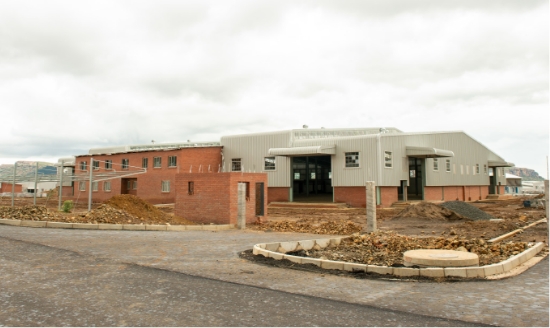
Belo Industrial Estate.
NOTE



Disclaimer
This web page provides a strategic overview. All financial figures are based on a high-level investment opportunity model and should be used as an indicator of potential only. Investors are strongly encouraged to conduct independent due diligence and a full feasibility study with the support of the LNDC to validate all assumptions under current market conditions.