
Industrial Hemp
Print/Download Page As PDF
Invest in Lesotho’s
Industrial Hemp Sector
Building a Sustainable, Export-Oriented Hemp Value Chain from the Heart of Southern Africa. Lesotho offers a strategic first-mover opportunity in commercial hemp production, leveraging ideal growing conditions, low production costs, and preferential trade access to global markets.

Introduction
This project is about cultivating and processing industrial hemp (Cannabis sativa L.) for fibre, hurd and value-added bio-materials (textiles, non-wovens, paper, animal bedding, hemp-lime blocks, biocomposites).
Policy note: Lesotho currently does not specifically license industrial hemp; government practice is to work through the Drugs of Abuse (Cannabis) Regulations (2018) used for medical cannabis. Investors should structure projects as “policy-ready” with compliance pathways and staged capex aligned to licensing milestones.
Lesotho presents a compelling opportunity for commercial cultivation and processing of industrial hemp (Cannabis sativa L.), targeting diverse export-oriented products including sustainable textiles, biocomposites, hemp seed foods, and CBD-based wellness products. The country’s high-altitude terrain, favourable climate, and established regulatory framework create optimal conditions for a robust hemp industry with multiple revenue streams.

Strengths &
Opportunities
With the global hemp market projected to exceed USD 65bn by 2027 and South Africa’s market alone reaching USD 215m by 2026, Lesotho is positioned to become a key supplier. Proximity to South Africa enables same-day road access to processors, converters and ports, facilitating quick access to major global markets.
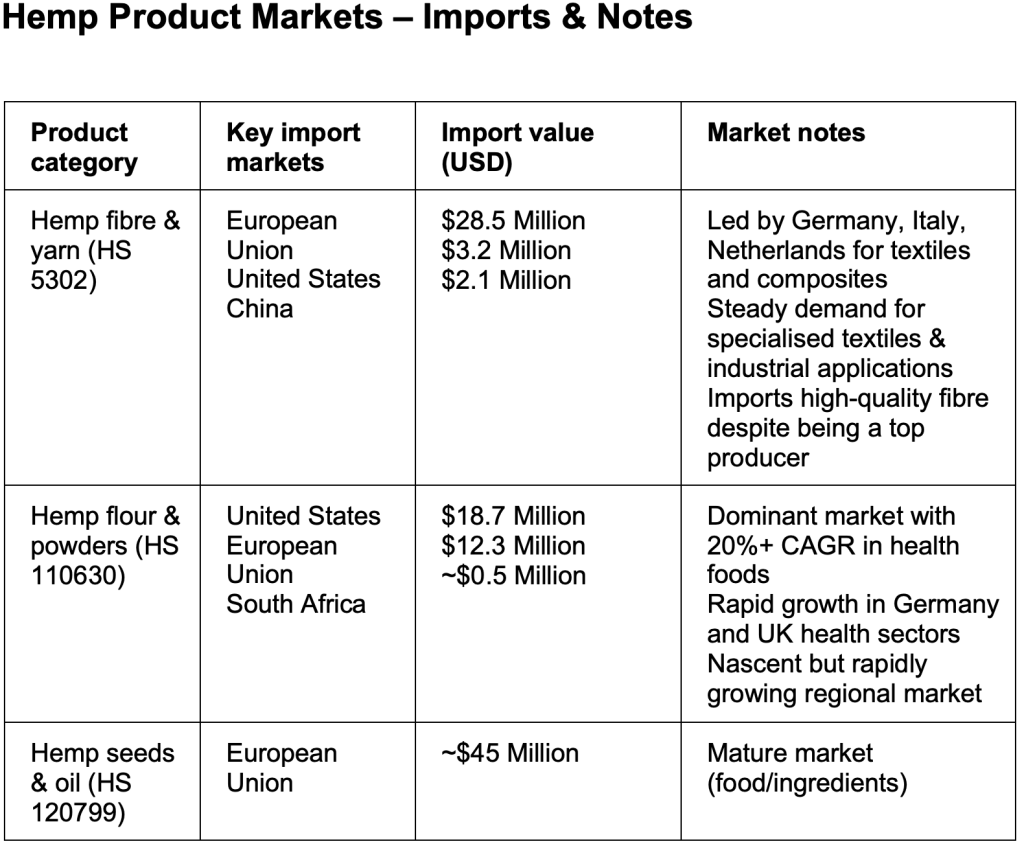
Global import demand for hemp products (selected HS lines) – (ITC Trade Map/UN Comtrade, 2023)
Market Evidence:
South African Leadership:
Market projected to reach USD 215m by 2026 with established regulatory framework
Regional Growth:
SADC nations developing hemp legislation, creating future regional market opportunities
AfCFTA Advantage:
Continental free trade area enables access to emerging African consumer markets
Local Demand:
South Africa’s hemp flour imports signal ready market for Lesotho’s value-added products
Supply Chain Opportunity:
China’s 15% annual growth in fibre imports indicates demand for quality hemp that Lesotho can supply
Premium Positioning:
Lesotho’s pristine environment supports production of high-value, contaminant-free hemp for discerning markets
Revenue Diversification:
Multiple product streams (fibre, hurd, seed, flower) de-risk business model and maximize ROI
Incentives
10% corporate tax for commercial agriculture, agro-processing and manufacturing. agricultural goods produced in Lesotho
Training:
• Cost of Lesotho citizens allowable at 125% for tax purposes
Withholding tax:
• 10% on service contracts with non-residents
• 25% on dividends distributed from income by resident companies to non-resident shareholders
• No withholding tax on dividends distributed to Lesotho residents
VAT:
• 15% on goods and services sold in Lesotho
• 0% on direct exports
Risk guarantees:
• Partial credit guarantee through the LNDC
• Tailor-made, agriculture-specific loan through the Lesotho Post Bank
Specific incentives for the horticulture sector:
Support from the LNDC includes:
• Serviced industrial and commercial sites at competitive rentals
• Provision of industrial and commercial buildings at competitive rentals
• Financial assistance on a selective basis
• Investment facilitation services
• Assistance with permits and licenses
• Assistance with company registration
• Assistance with industrial relations issues
• Appraisal of investment projects
• Assistance with preparation of project briefs for the Environment Impact
Assessment (EIA) Certification
• Facilitating access to a Sesotho language technical training manual for local workers in on-farm and crop management
• Facilitating access to demonstration and crop pilot plots
• Facilitation support to identify and mobilize village level farmer engagement
• Facilitating access to technical data on historical crop performance
Strategic Advantages:
Competitive Production Advantages:
Optimal Growing Conditions:
Highland terrain with rich soils, pure water, and temperate climate ideal for high-yield, quality hemp.
Proven Agricultural Base:
Experienced workforce with transferable skills from traditional agriculture to hemp cultivation.
Cost Efficiency:
Lower land and labour costs compared to international competitors enhance profit margins.
Sustainable Advantage:
Natural growing conditions reduce need for chemical inputs, supporting organic certification.
Market Access & Logistics:
Preferential Trade Access:
Duty-free, quota-free entry to EU, UK, EFTA and China (GSP). Regional Integration: SACU membership provides immediate access to 350+ million consumer market.
Logistical Efficiency:
Under 6-hour lead times to South African distribution and logistics hubs (Johannesburg & Durban, Gqeberha and East London Ports ).
Export Processing:
VAT zero-rating on direct exports enhances competitiveness. Duty rebates and drawbacks on input/intermediate materials imports used in manufacturing. Agricultural inputs subsidies.
Business Environment:
Fiscal Incentives: 10% corporate tax rate for agro-processing companies improves investment returns
Regulatory Pathway:
Established cannabis licensing framework provides foundation for hemp regulations – potential for progressive sector development focused reform. Investment Facilitation: LNDC support for site selection, permits, and investor aftercare services.
Utilities & Industrial Infrastructure: Reliable and cheap hydro-electric and solar power and water access. LNDC provides fully-serviced factory shells for processing and manufacturing.
List of investment opportunities
Primary Production & Processing:
Integrated Hemp Operations:
Combined cultivation and primary processing (decortication) for fibre and hurd
Seed Processing:
Facilities for hemp seed oil extraction and protein powder production
Quality Focus:
Implementation of testing and certification protocols for international markets
Value-added Manufacturing
Textile Production:
Processing fibre into yarn and fabric for sustainable fashion and technical textiles
Biocomposites:
Manufacturing hempcrete for construction and automotive applications
Consumer Products:
Development of hemp-based foods, supplements, and personal care items
Market Expansion
Brand Development:
“Mountain-Grown” premium branding for international markets
Product Diversification:
Expansion into specialized extracts and advanced materials
Regional Leadership:
Positioning as Africa’s premium hemp supplier across multiple product categories


Project Assumptions
Currently Lesotho does not have legislation on the cultivation, processing, export and transportation of hemp. The government is however intending to use the same regulations that govern the cannabis industry, the Drugs of Abuse (Cannabis) Regulations administered by the Department of Health for this purpose.
SDGs alignment
The project aligns with SDGs 8, 9 and 10.
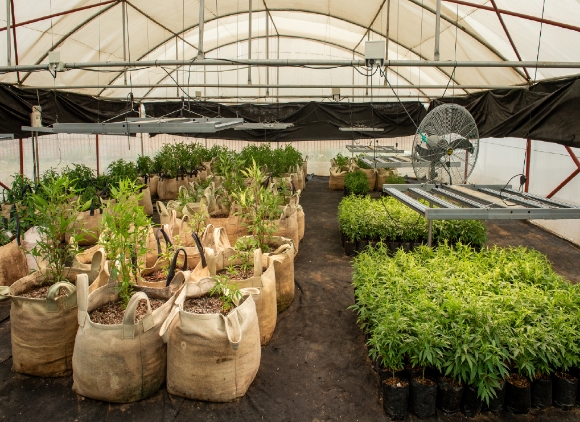
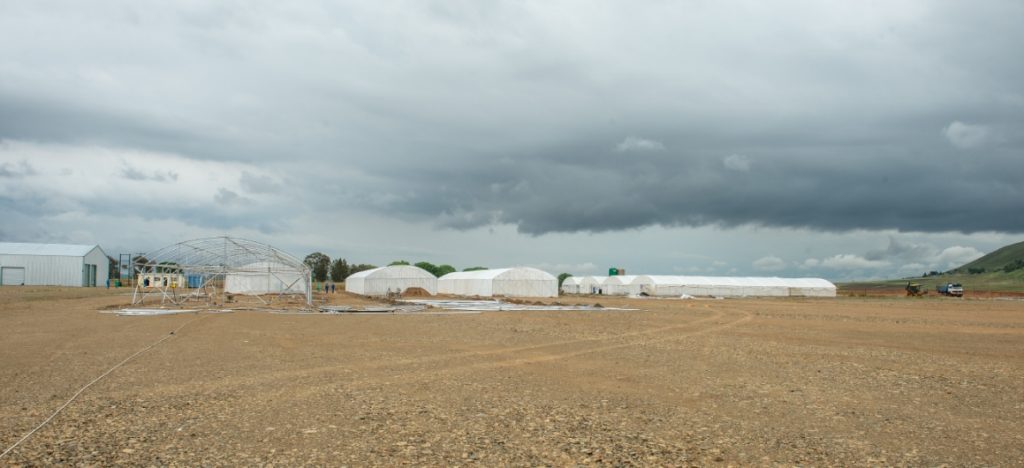
Example of a site for growing and processing Hemp.
Financial Analysis
TOTAL INVESTMENT
A total investment of approximately:
USD 2.4m
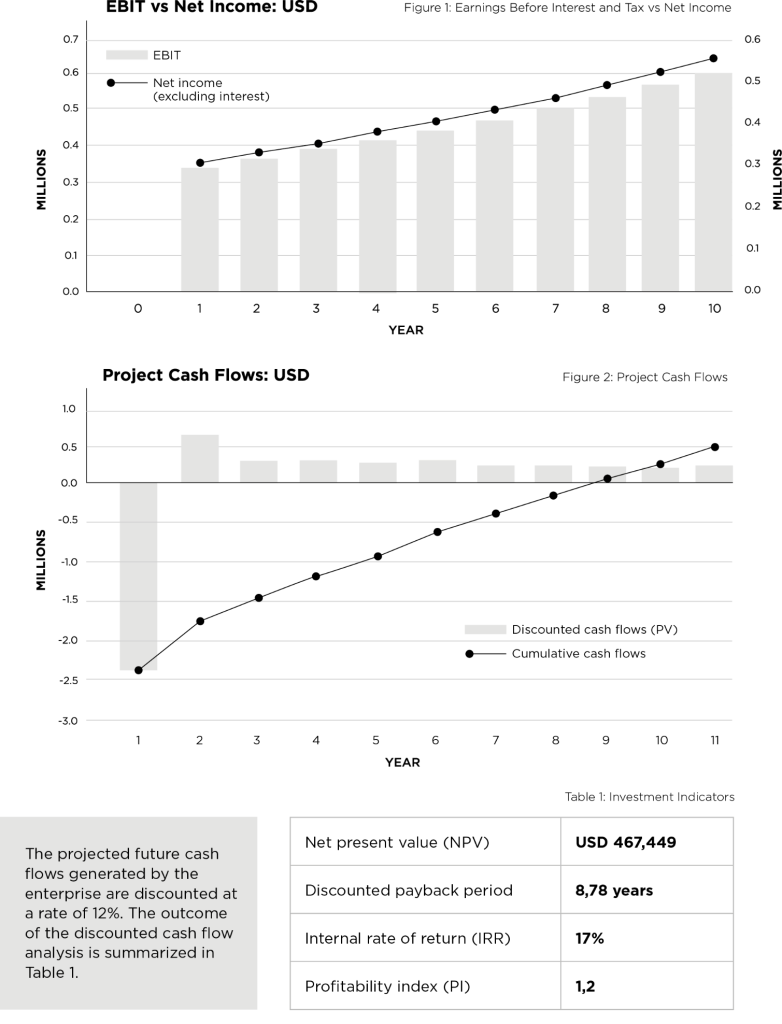
comprising fixed assets of almost USD 1.5m, pre-production expenditure of USD 389k and initial working capital of USD 500k will be required for the establishment of the Hemp production enterprise. The graphs below illustrate a financially viable operation with the opportunity expected to generate a
profit throughout its operational life.
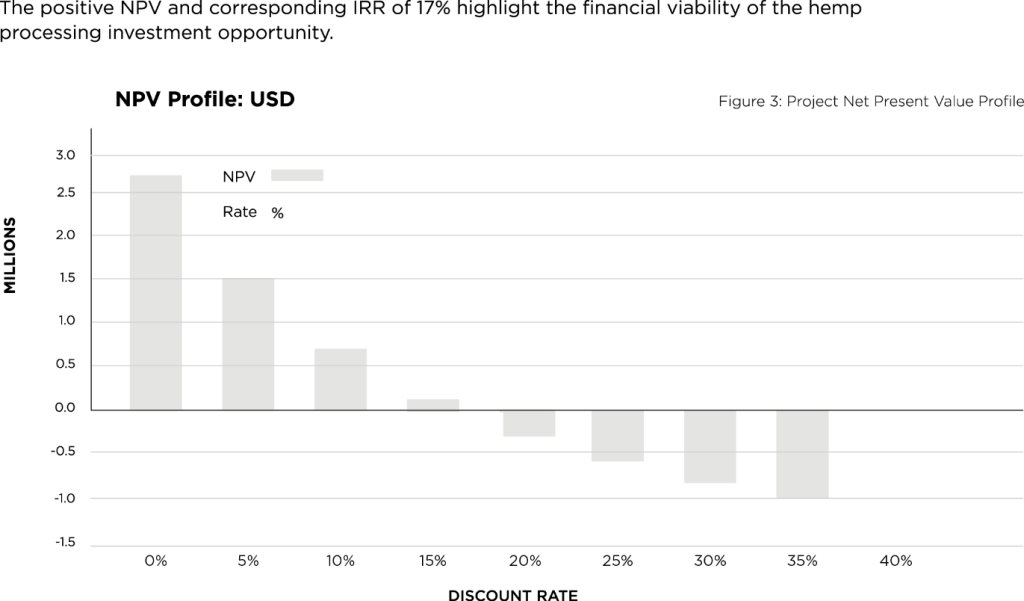
Whereas the opportunity generates a positive NPV and IRR, the initial investment cost of the project, although acceptable, is only expected to be fully recovered in year 11. The investment opportunity nevertheless responds favourably to the Country`s developmental objectives through its positive socio-economic impact in terms of employment creation, economic agglomeration and potential forex earning opportunities.
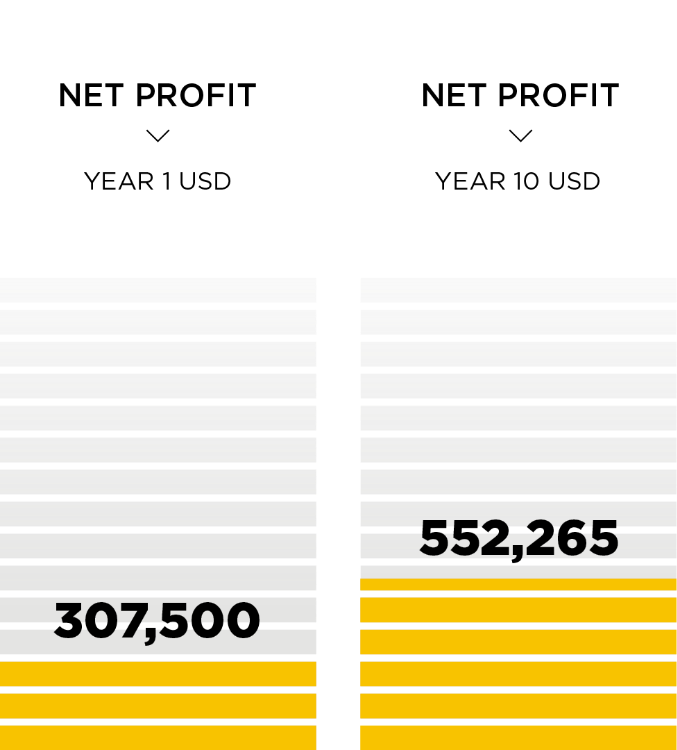
The enterprise’s annual net profit after tax increases from approximately:
USD 307k
in year 1 to approximately:
USD 522k
in year 10.
Similarly, the projected cash flows
of the envisaged project indicate that it will generate positive net cash flows throughout the 10-year operational period.
Financial Analysis
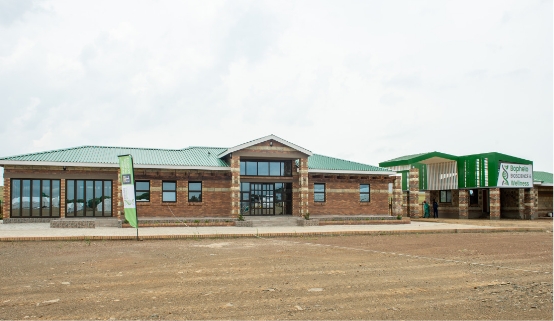
Example of site where Hemp is made.
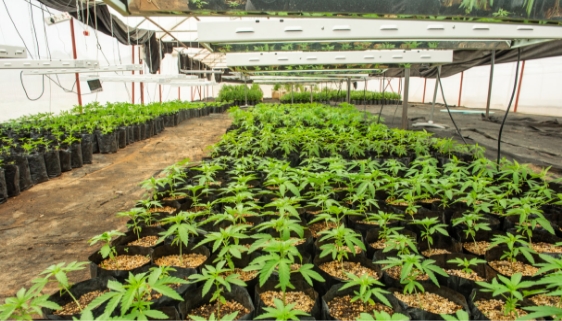
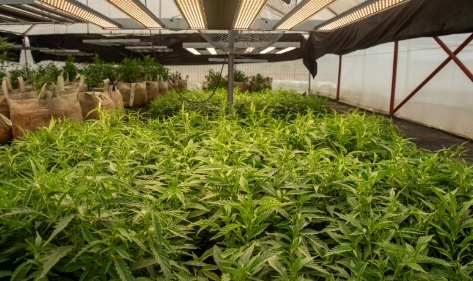
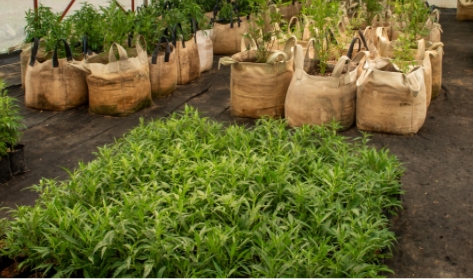
Hemp being grown for industrial use.
NOTE
This is a mid-sized facility with an annual capacity of 500 tons, focused on industrial hemp processing into fiber decortication for textiles and building materials as well seed and grain for animal feed. The financial analysis of the Hemp investment opportunity is computed over a ten-year period. Revenue and expenditure projections are in line with industry growth prospects and market potential and have been informed by and benchmarked against industry standards and norms. In addition, assumptions relating to inflation; depreciation and salvage value; and company tax, have been worked out based on the existing laws and directives of the country. The figures above represent high level estimates as of October 2025 and are not derived from a full feasibility study. Investors are advised to conduct their own due diligence.



Disclaimer
This web page provides a strategic overview. All financial figures are based on a high-level investment opportunity model and should be used as an indicator of potential only. Investors are strongly encouraged to conduct independent due diligence and a full feasibility study with the support of the LNDC to validate all assumptions under current market conditions.