
Knit/Woven Fabric Mill
Print/Download Page As PDF
Invest in Lesotho’s
Knit/Woven Fabric Mill Opportunities
Africa’s Textile and Garments Vertical Integration Anchor. Secure Fabric Supply and Leverage Competitive Production to Drive SADC, African and EU Export Growth.
Introduction
Lesotho’s strategic investment opportunity lies in establishing knit/woven fabric mills to service its apparel cluster and access global markets. The investment aims to substitute significant fabric imports and elevate the country’s competitiveness as an export-focused apparel hub.
The location offers a unique combination of advantages:
Global Market Access: Zero or low tariff arrangements depending on the material, available through preferential frameworks (EU–SADC EPA, SACU–EFTA, SACUM–UK, SACU–MERCOSUR, North America).
Integrated Infrastructure:
Water and wastewater treatment facilities support serviced plots or existing modern industrial units, a necessity for dyeing and finishing operations.
Labour Advantage:
A large, experienced textiles workforce exhibits high labour productivity as experienced by established international firms over several years.
Raw Materials Access:
Raw materials can be accessed from the African region and/or easily imported from the rest of the world through efficient logistics hubs in South Africa.
Investor Support:
Government incentives support investment and training costs, with facilitation via the LNDC.

Strengths &
Opportunities
Strategic Value Chain Integration.
The core opportunity is to address Lesotho’s substantial fabric trade deficit : e.g.USD 89.7m
of knitted fabrics (HS 60) imported in 2024 and capture regional demand.
Import Substitution:
Mill operations serve a massive, ready-made domestic market to supply the country’s extensive apparel assembly sector.
Rules of Origin (RoO) Compliance:
Local fabric production increases the value-add of final garments, securing favourable RoO for preferential access to markets.
Regional Supply:
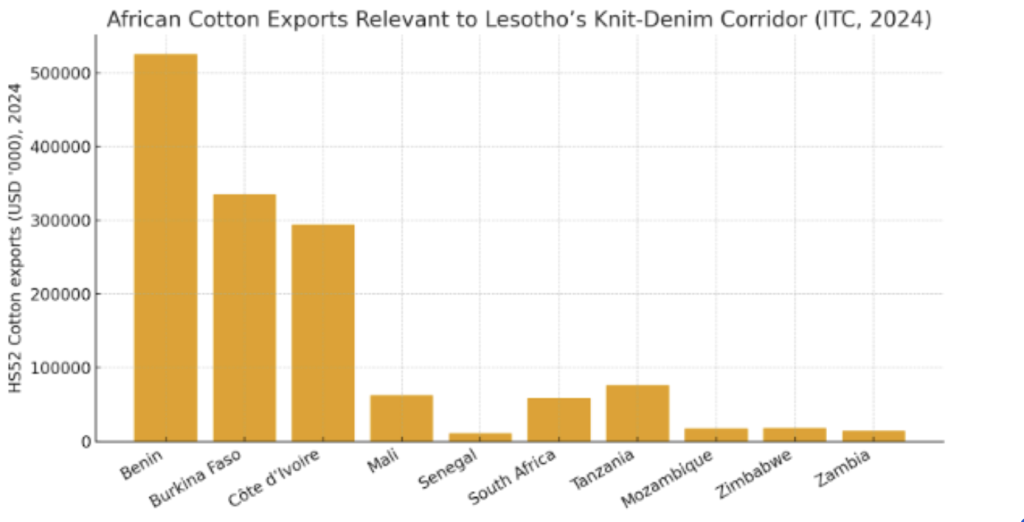
The industry can leverage African cotton exporters (HS 52) to feed Africa-proximate spinning and fabric lines, supporting a fully integrated African value chain.
Industrial Cluster and Logistics
Infrastructure:
Eight LNDC-operated industrial parks offer serviced factory shells and plots, with necessary wastewater treatment capacity suitable for dyeing/finishing.
Labour Pool:
Lesotho has an established skills pool of over 250,000 workers dedicated to textiles.
Logistics:
The country provides near-market access to South Africa’s apparel and retail hubs, with overnight trucking to Gauteng/Kwazulu Natal/Eastern Cape and gateway ports like Durban, East London, and Gqeberha.
Incentives
Low corporate income tax:
• 10% on profits from manufacturing
Training:
• Cost of Lesotho citizens allowable at 125% for tax purposes
Withholding tax:
• 10% on service contracts with non-residents
• 25% on dividends distributed from income by resident companies to non-resident shareholders
• No withholding tax on dividends distributed to Lesotho residents
VAT:
• 15% on goods and services sold in Lesotho
• 0% on direct exports
• Duty rebates and drawbacks under the SACU regime for specified materials/goods.
Risk guarantees:
• Partial credit guarantee through the LNDC
• Facilitation support to identify and mobilize labour and skills development partnerships
Support from the LNDC includes:
• Serviced industrial and commercial sites at competitive rentals
• Provision of industrial and commercial buildings at competitive rentals
• Financial assistance on a selective basis
• Investment facilitation services
• Assistance with permits and licenses
• Assistance with company registration
• Assistance with industrial relations issues
• Appraisal of investment projects
• Assistance with preparation of project briefs for the Environment Impact Assessment (EIA) Certification

Strengths &
Opportunities
A Strategic, Ethical Base for Knit & Woven Textile Manufacturing Lesotho presents a compelling opportunity for investors in knit and woven fabric mills and apparel production, offering a blend of cost efficiency, market access, and responsible manufacturing standards.
The country’s textile and apparel sector employs over
32,000 workers
LESOTHO’S EXPORT REACH IS EXTENSIVE:
50%
ACCOUNTS FOR SOUTH AFRICA
followed by the USA (26%) and Belgium (19%). Through trade agreements such as AGOA (USA), EU-SADC EPA (EU), AfCFTA (Africa), and other GSP arrangements, Lesotho enjoys duty-free access to major global markets, offering a strong platform for export-led growth.
Strategically located, Lesotho provides overnight trucking access to South Africa and just a six-hour drive to the Port of Durban, supporting cost-effective logistics for global shipping.
Amid global shifts in sourcing, Lesotho is investing in resilience and quality with international support from the ILO and ITC to rebuild and upskill its workforce, retain WRAP standards, and attract value-added production.
With a trainable, English-speaking workforce, competitive labour costs, established export infrastructure, and an ecosystem aligned with ethical, sustainable manufacturing, Lesotho is primed to host forward-looking textile and apparel investors targeting Africa, Europe, and North America.
Competitive advantages
List of investment opportunities

Project Assumptions
LNDC will allocate factory shells/plots (Tikoe, Belo, Maputsoe) with necessary wastewater capacity suitable for dyeing/finishing, support EIA/permitting and utilities, and introductions to the local industry cluster.
SDGs alignment
The project aligns with SDGs 1, 2, 8, 9 and 10.
Financial Analysis
A total investment of approximately:
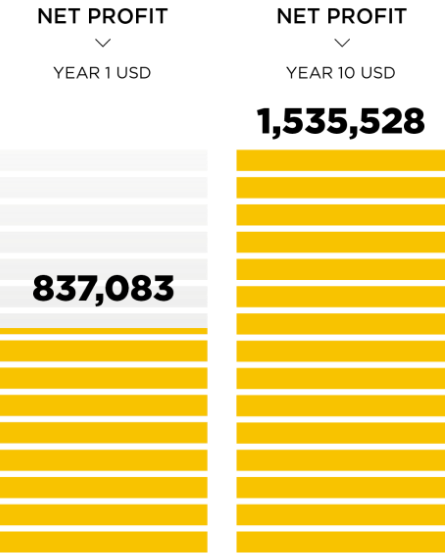
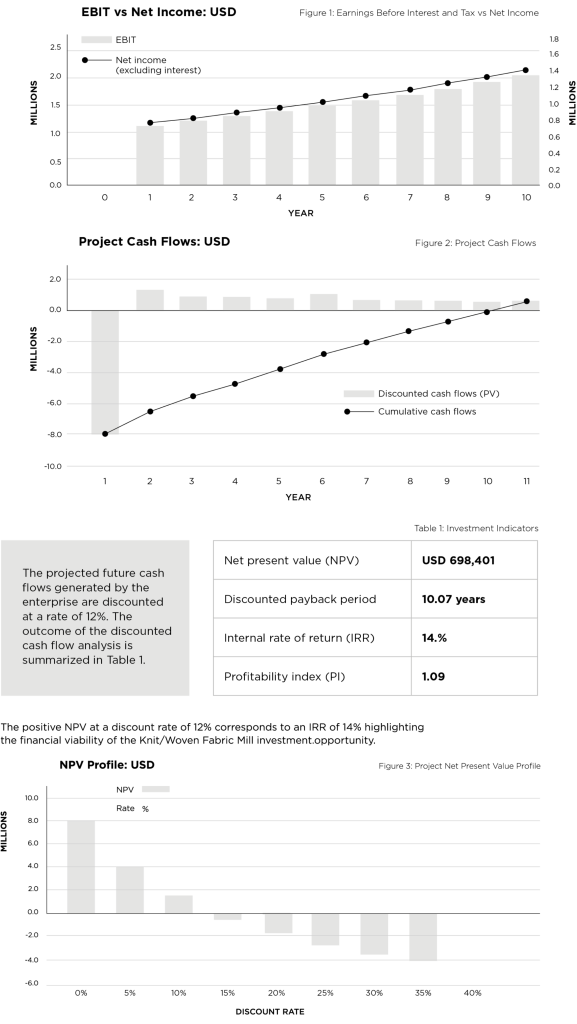
The enterprise’s annual net profit after tax increases from
USD 837k
in Year 1 to approximately:
in Year 10.
Similarly, the projected cash flows of the envisaged project indicate that it will generate positive net cash flows throughout the 10-year operational period.
Knit/Woven Fabric Mill.
Financial Analysis
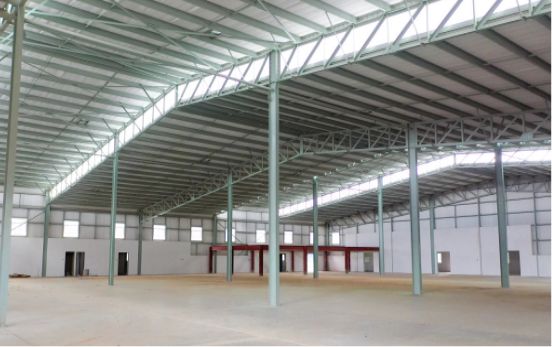
Belo Industrial Park, Butha Buthe.

Nyenye Industrial Park, Maputsoe.
NOTE



Disclaimer
This web page provides a strategic overview. All financial figures are based on a high-level investment opportunity model and should be used as an indicator of potential only. Investors are strongly encouraged to conduct independent due diligence and a full feasibility study with the support of the LNDC to validate all assumptions under current market conditions.