Presents a high-return investment opportunity in integrated pig/hog production and meat processing.
Introduction
With a demonstrated domestic supply deficit and privileged access to regional and international markets, the sector offers clear, data-backed potential.
The core opportunity involves developing a modern, integrated pork industry in Lesotho encompassing breeding, rearing, accredited abattoirs and processing facilities to capture the domestic market and export high-value products.
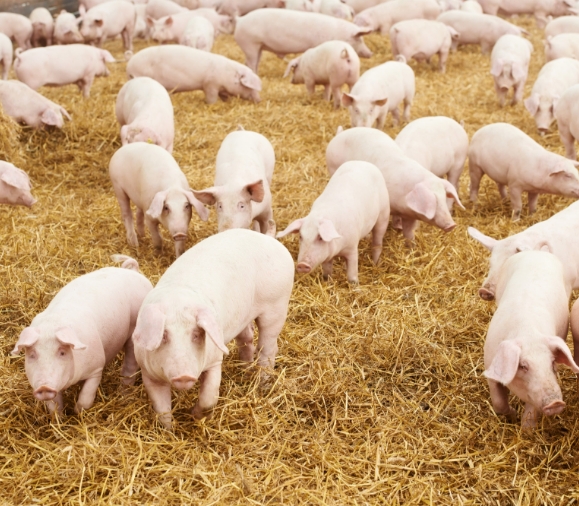
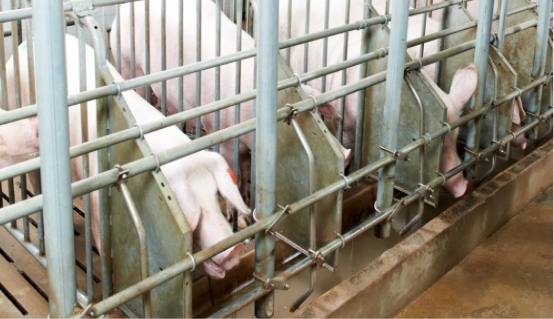
While pigs are commercially – albeit in small-medium scale – and traditionally reared for home consumption, this initiative aims to transition to intensive commercial farming and establish a formal value chain.
Strengths & Opportunities
Market Evidence & Export Potential: Quantitative trade data underscores a significant and immediate opportunity for import substitution and export growth.
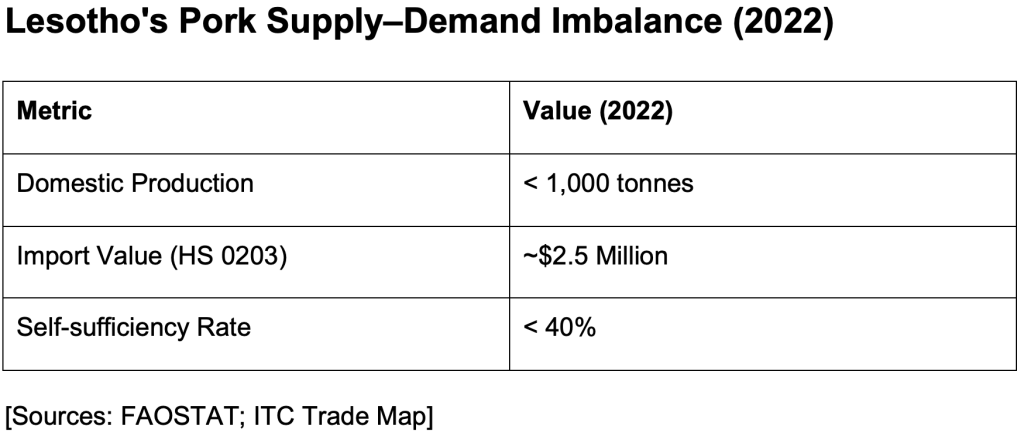
Domestic Supply-Demand Gap: Lesotho is a net importer of pork, importing USD 2.5m in 2022 while producing less than 1,000 tons, primarily from South Africa. The absence of large-scale commercial production creates a clear opportunity to capture the formal domestic market.
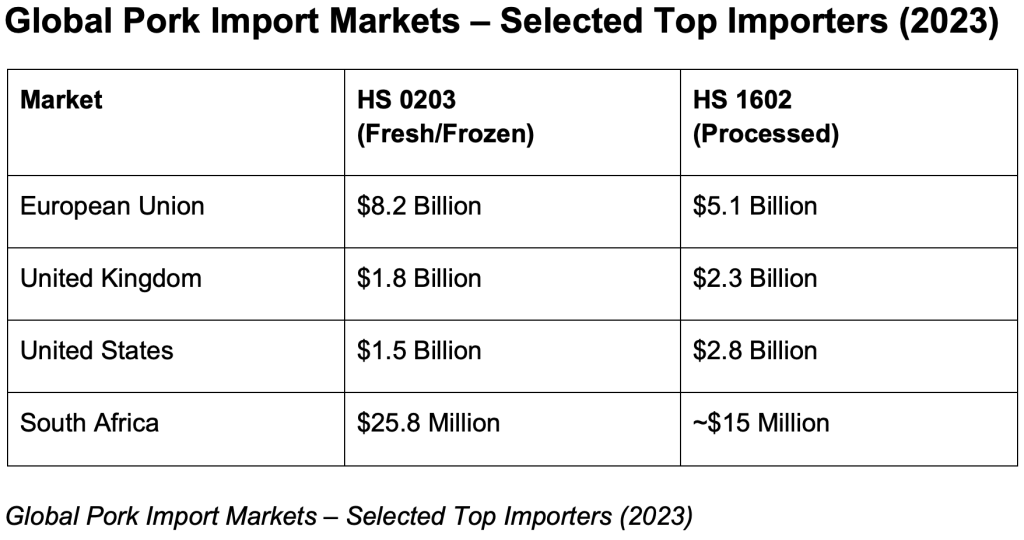
Regional Market (SACU) – An over USD 60m Opportunity: South Africa, the core of the SACU market, is a substantial net importer of pork products, imported over USD 40m in 2023, as shown in the data below.
International Market Access: Lesotho has duty-free, quota-free access for pork products to the SADC, EU & UK a critical advantage for value-added exports (HS 1602) upon achieving SPS compliance – potentially to the US dependant on AGOA renewal.
Lesotho offers a high-potential opportunity to develop SPS-compliant pork processing facilities, replacing imports and enabling duty-free exports to regional and global markets.
Strategic Advantages – The Lesotho Advantage:
Favorable Production Environment: Cost Competitiveness: Labour and utilities costs approximately 60-80%of the level in South Africa.
Skilled, Trainable Workforce: Over 82% of the population is literate. Labour relations are harmonious.
Government Support & Incentives: 10% Corporate Income Tax for commercial farming and agro-processing, with 0% withholding tax on dividends.
Subsidies on agricultural inputs. The LNDC offers serviced factory shells in strategic locations like Maseru and Berea.
Strategic Logistics: Excellent road connectivity with South Africa ensures efficient access to ports (Durban, Gqeberha, East London) and regional markets.
Incentives
Corporate tax: • 10% on profits from sales of agricultural goods produced in Lesotho.
Training: • Cost of Lesotho citizens allowable at 125% for tax purposes.
Withholding tax: • 10% on service contracts with non-residents • 25% on dividends distributed from income by resident companies to non-resident shareholders. • No withholding tax on dividends distributed to Lesotho residents.
VAT: • 15% on goods and services sold in Lesotho • 0% on direct exports.
Risk guarantees: • Partial credit guarantee through the LNDC • Tailor-made, agriculture-specific loan through the Lesotho Post Bank.
Specific incentives for the horticulture sector: Support from the LNDC includes: • Serviced industrial and commercial sites at competitive rentals. • Provision of industrial and commercial buildings at competitive rentals • Financial assistance on a selective basis • Investment facilitation services • Assistance with permits and licenses • Assistance with company registration • Assistance with industrial relations issues • Appraisal of investment projects • Assistance with preparation of project briefs for the Environment Impact Assessment (EIA) Certification. • Facilitating access to a Sesotho language technical training manual for local workers in on-farm and crop management. • Facilitating access to demonstration and crop pilot plots. • Facilitation support to identify and mobilize village level farmer engagement. • Facilitating access to technical data on historical crop performance.
Competitive Advantages
Lesotho’s proximity to South Africa, strong road infrastructure, and low production costs position it as an ideal base to serve both regional demand and high-value international markets, provided that health and safety standards are met. The growing market gap and lack of local processing capacity present a clear opportunity for value-added investment in pigs and pork products.
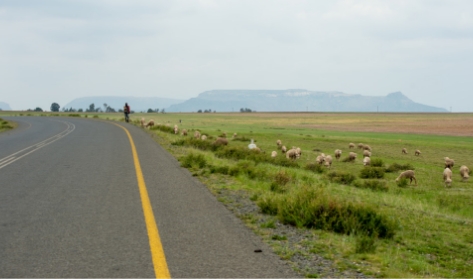
Abundant available land for pig/hog farming.
List of investment opportunities
The project invites investment across the entire pork value chain.
Core Integrated Project:
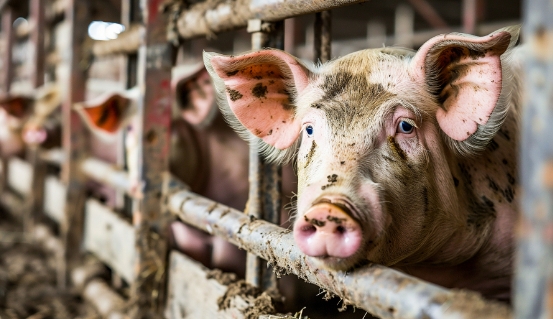
Commercial Pig Farms: Large-scale, biosecure breeding and finishing units.
Accredited Abattoirs: EU- and SACU-compliant slaughtering facilities.
Meat Processing Plants: For value-added products (HS 1602) like hams, bacon, and sausages.
The project would align with SDGs 1,2, 8, 9 and 10.
Financial Analysis
TOTAL INVESTMENT
A total investment of approximately:
USD 3m
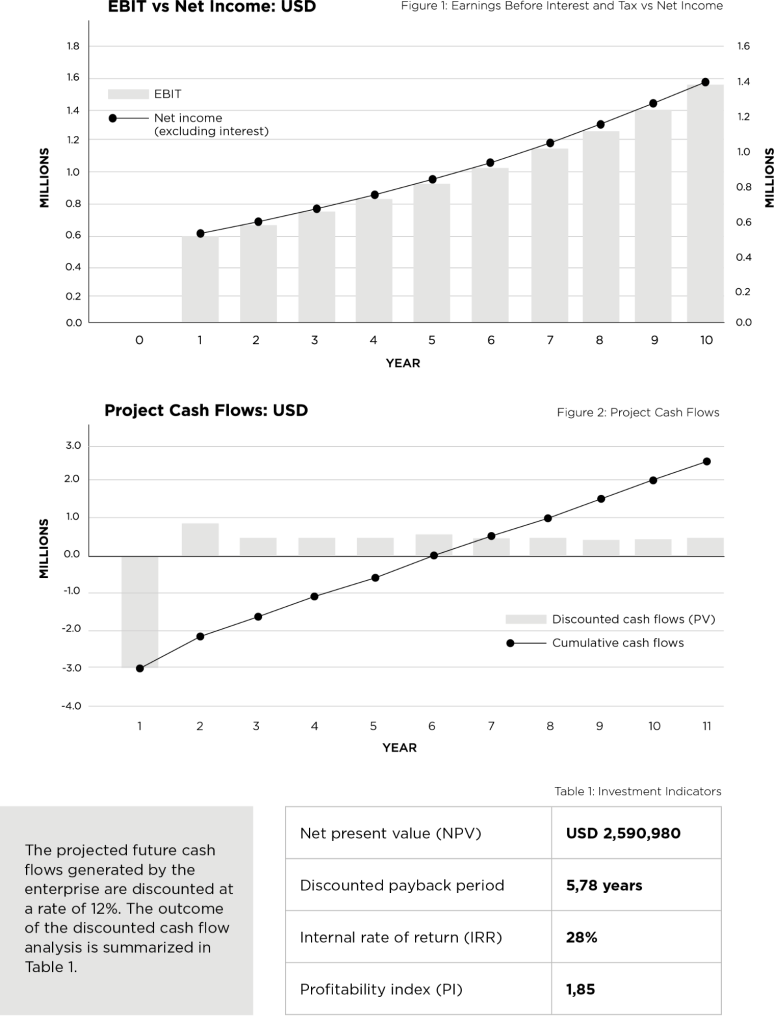
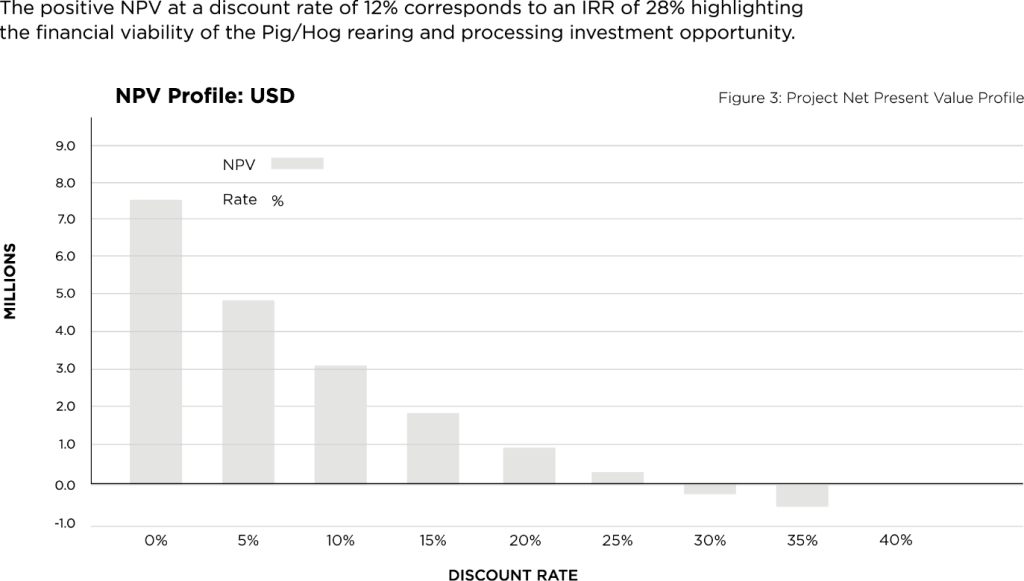
comprising fixed assets of USD 2.4m, pre-production expenditure of USD 214k and initial working capital of almost USD 445k will be required for the establishment of the Pig/Hog rearing and processing enterprise. The graphs below illustrate a financially viable operation with the opportunity expected to generate a profit throughout its operational life.
In addition to the positive NPV and IRR, the initial investment cost of the project is expected to be fully recovered in just under 6 years. The investment opportunity further responds favourably to the Country’s developmental objectives through its positive socio-economic impact in terms of employment creation, economic agglomeration and potential forex earning opportunities.
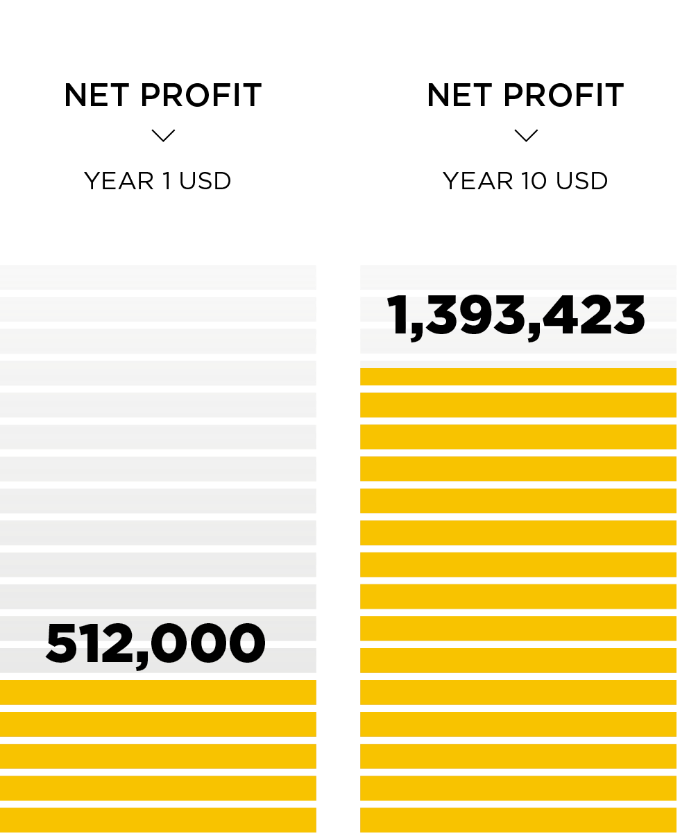
NET PROFIT
The enterprise’s annual net profit after tax increases from
USD 512k
in year 1 to approximately:
USD 1.4m
in year 10.
Similarly, the projected cash flows of the envisaged project indicate that it will generate positive net cash flows throughout the 10-year operational period.
Financial Analysis
NOTE
This is a small-sized integrated operation consisting of rearing and basic processing. The plant has a processing capacity of 5,000 pigs annually. The financial analysis of the Pig/Hog rearing and processing investment opportunity is computed over a ten-year period. Revenue and expenditure projections are in line with industry growth prospects and market potential and have been informed by and benchmarked against industry standards and norms. In addition, assumptions relating to inflation; depreciation and salvage value; and company tax, have been worked out based on the existing laws and directives of the country. The figures above represent high level estimates as of October 2025 and are not derived from a full feasibility study. Investors are advised to conduct their own due diligence.
DISCLAIMER
This web page provides a strategic overview. All financial figures are based on a high-level investment opportunity model and should be used as an indicator of potential only. Investors are strongly encouraged to conduct independent due diligence and a full feasibility study with the support of the LNDC to validate all assumptions under current market conditions.